
Ask a family how to cut their water use and the answers are usually about habits: shorter showers, turning the tap off while brushing, fixing the drip in the bathroom. They all help, and they all depend on everyone remembering, every day. A flow restrictor doesn't. It sits at the end of the tap or the shower arm and sets how much water comes out, every time, for everyone, whether they're thinking about water or not.
That's the idea behind the EarthFokus Home Kit: five small fittings for the three outlets where most of a home's water runs. This guide covers where the water goes, what each fitting does, what a typical family saves, and what else drops when the water does.
01Where a home's water goes
India's planning norm for homes with full plumbing is 135 litres per person per day. The design breakdown behind it: 55 litres for bathing, 30 for flushing, 20 for washing clothes, 10 each for utensils and house cleaning, and 5 each for cooking and drinking.12 Real homes vary a lot, but the shape is useful.
More than half of each person's water, around 75 of the 135 litres, runs through a shower, a kitchen tap or a bathroom basin. Those are the outlets to fix first: they run every day, they run for minutes at a time, and in most homes nothing controls how much they deliver.
02What's in the Home Kit
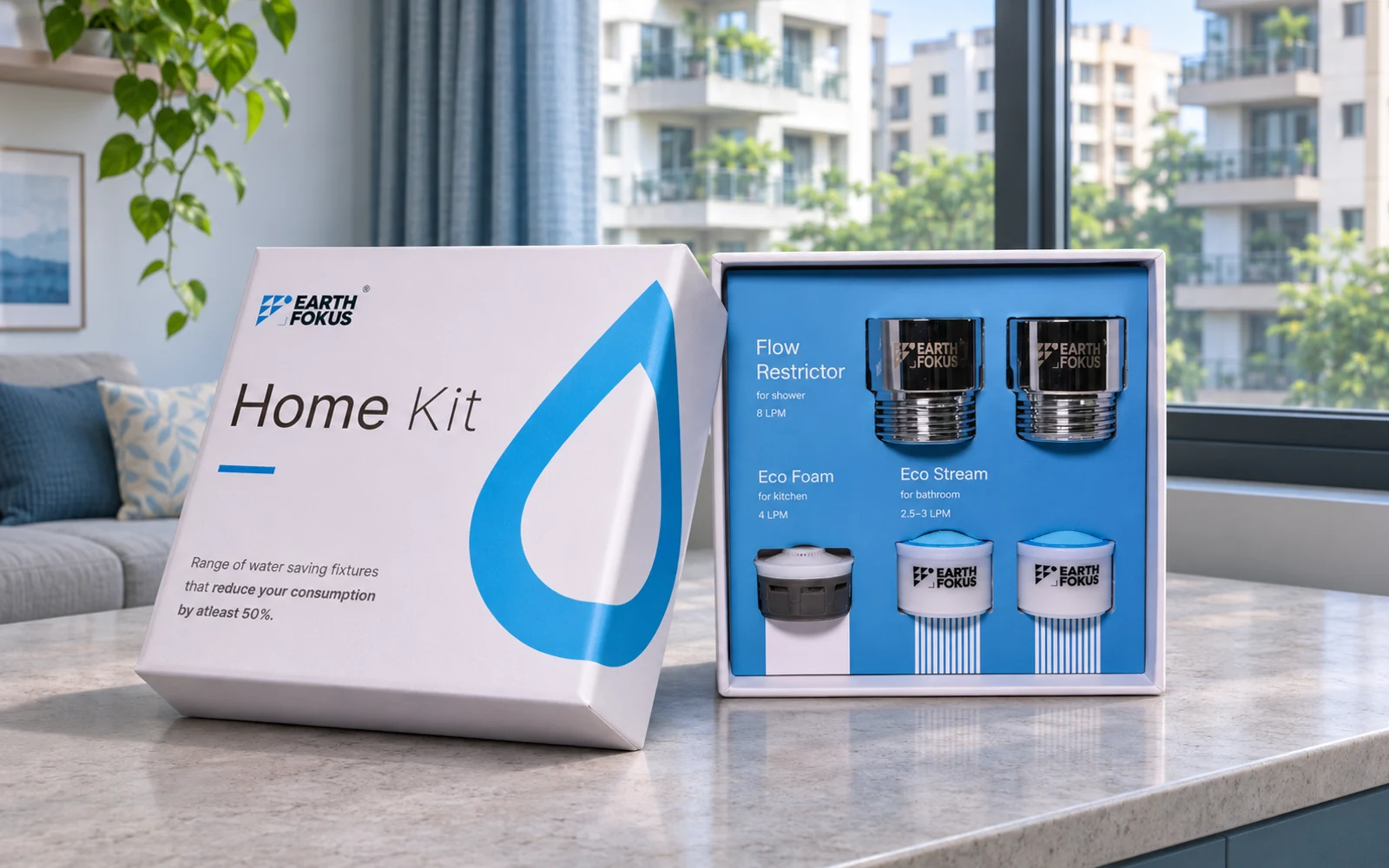
| Fitting | Qty | Rated flow | Where it goes | Against IS 17650 |
|---|---|---|---|---|
| Shower flow restrictor | 2 | 8 L/min | Between the shower arm and the head | Meets the 2-star overhead shower line (8.0) |
| Eco Foam | 1 | 4 L/min | Kitchen tap | Better than the 3-star sink tap line (4.5) |
| Eco Stream | 2 | 2.5 to 3 L/min | Bathroom basin taps | Meets the 3-star basin tap line (3.0) |
Each fitting is set to the job its outlet does, not to the lowest number possible. A kitchen tap that fills pans and a shower that has to rinse shampoo out need more water than a basin used for brushing teeth, so they get more. IS 17650, India's water efficiency standard for fittings, sets its limits the same way: different lines for basins, sinks and showers.3 Every fitting in the kit is pressure-compensating, so it holds its rating as the pressure changes.
03Outlet by outlet
The shower: the biggest single saving
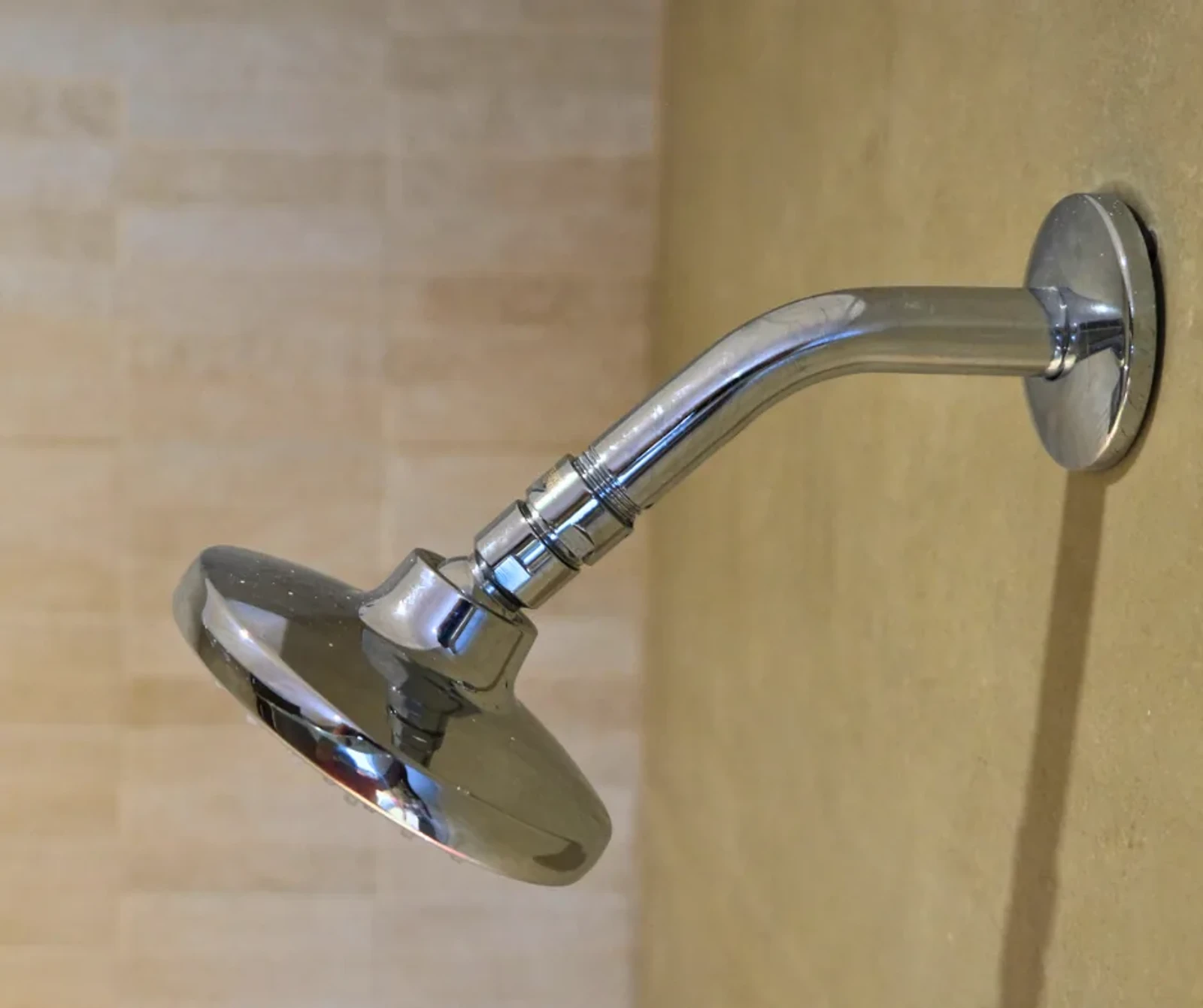
An unregulated shower in a pressurised building can run at 12 litres a minute or more. The restrictor screws in between the arm and the head and holds it at 8. That's the IS 17650 2-star line for overhead showers,3 and it's still a full shower.
The shower is also where hot water goes, so this fitting saves geyser electricity too (section 06). One honest caveat: if your family bathes with a bucket, the bucket sets the volume, and a shower restrictor saves little. The tap fittings still work.
The kitchen tap: foam, not force
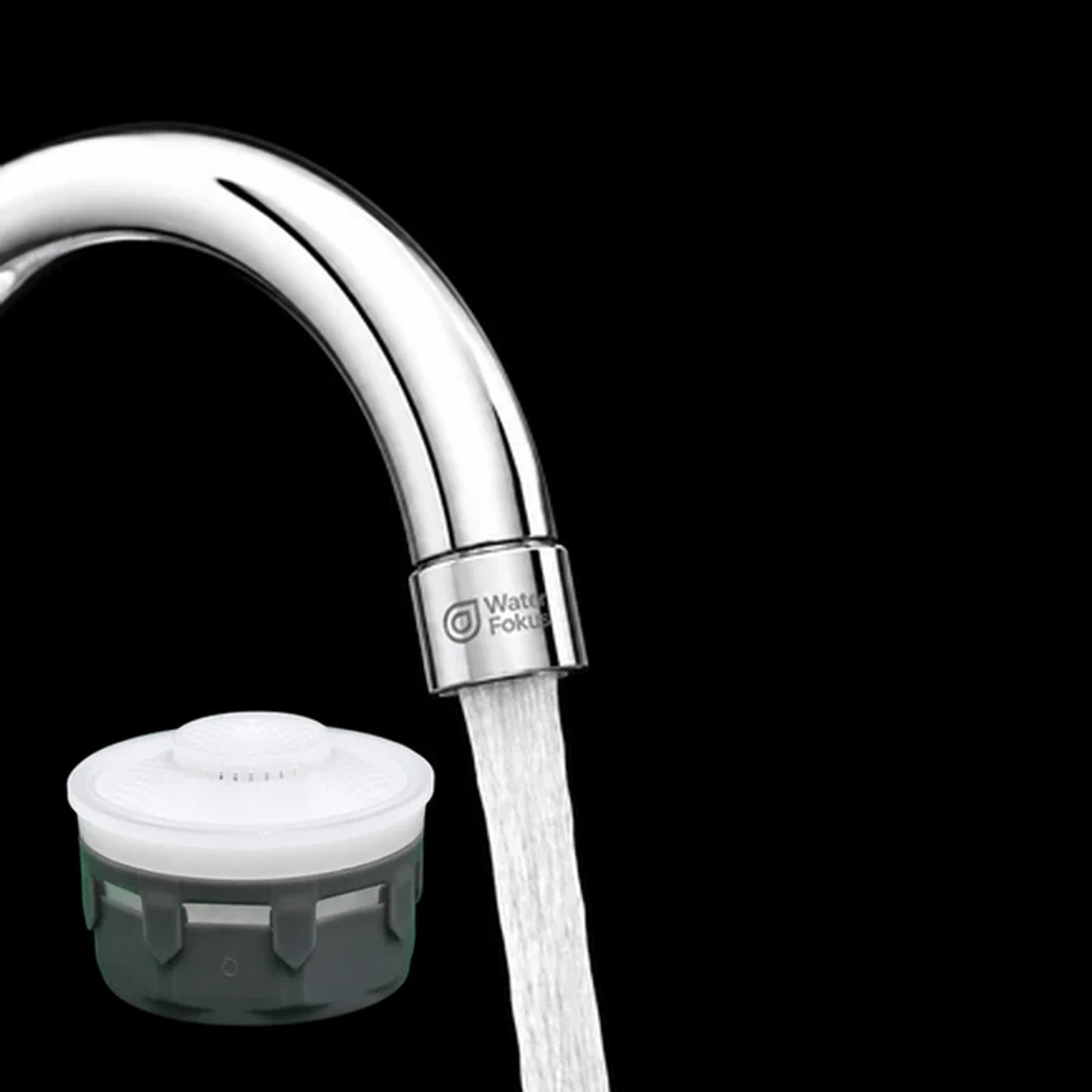
Eco Foam turns the stream into a soft, aerated column at 4 litres a minute. It rinses plates and vegetables without splashing, and it's better than the IS 17650 3-star line for sink taps.3
Where the saving comes from is rinsing: water running over dishes, a tap left on between tasks. Filling a pot or a bottle takes the same volume either way, just a little longer.
The bathroom basin: brushing, shaving, washing hands
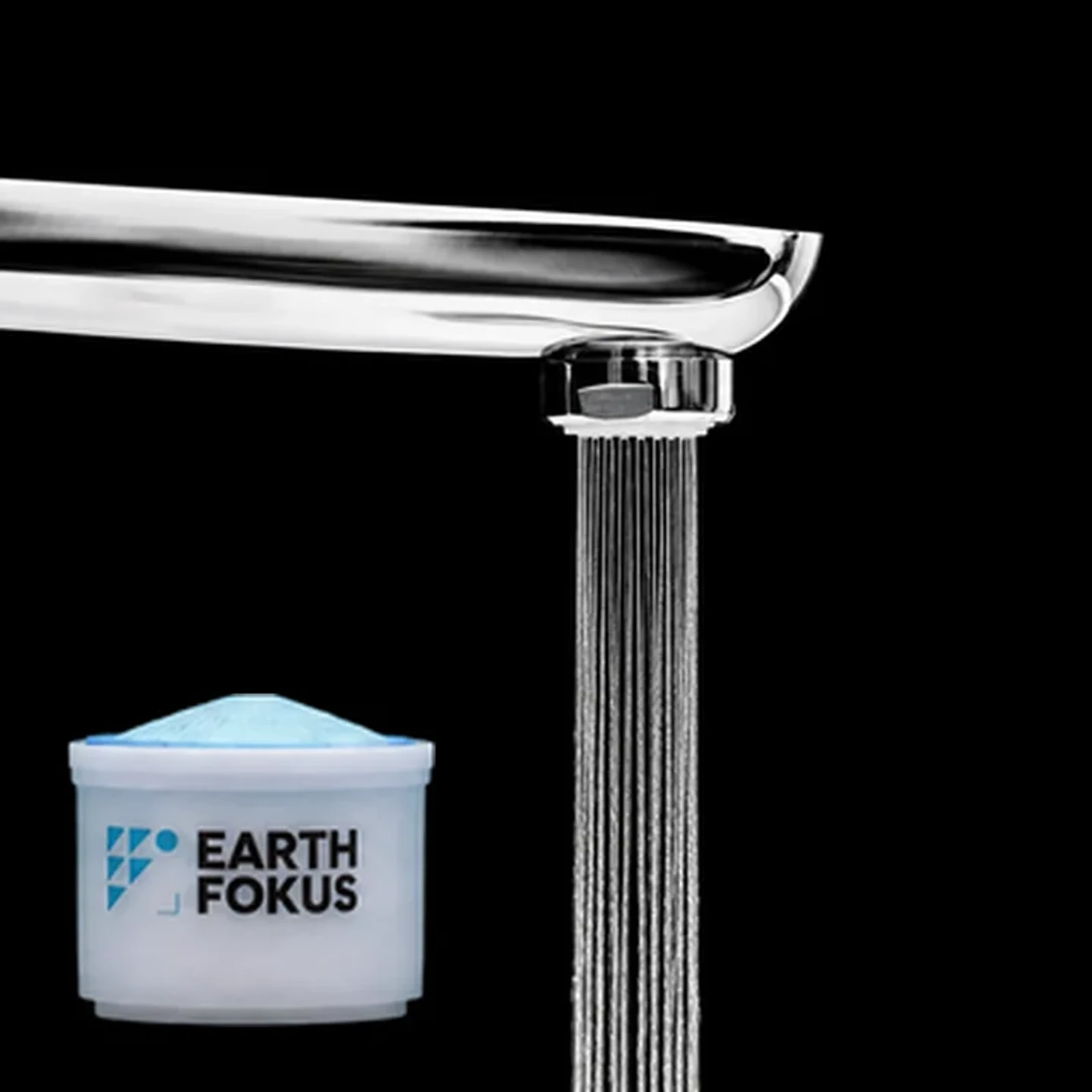
Basin use is short and frequent, and almost all of it is rinsing. Eco Stream holds the basin at 2.5 to 3 litres a minute, the IS 17650 3-star line for basin taps.3 Research on hand washing found that flow between about 2 and 8 litres a minute made no difference to how many germs were removed; soap and rubbing did the work.4
The health faucet: an add-on worth fitting
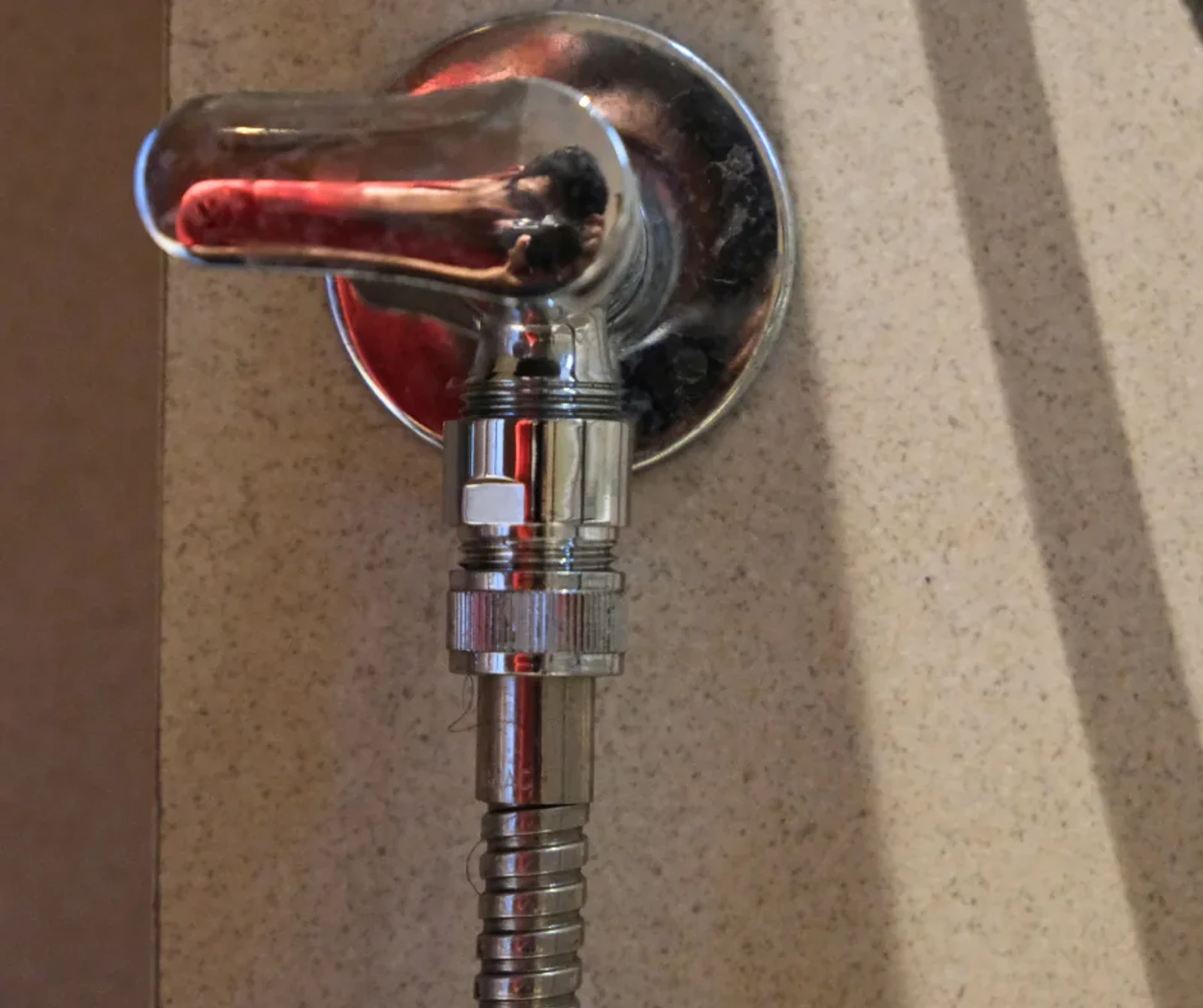
The health faucet isn't in the kit, but it's used on almost every bathroom visit, and on lower floors it can deliver a jet that's both wasteful and uncomfortable. A restrictor fitted between the angle valve and the hose steadies it. IS 17650's 3-star line for ablution sprays is 4 litres a minute.3
04How a restrictor holds its flow
Water pressure in Indian homes varies a lot: by floor, by whether the building has a pressure pump, and by the time of day. An ordinary tap lets more water out as pressure rises. A pressure-compensating restrictor has a flexible ring in a shaped seat. The harder the water pushes, the more the ring squeezes into the seat and the smaller the opening becomes, so the flow stays close to its rating.
A restrictor caps the flow; it can't add pressure. On a top floor fed by gravity from the overhead tank, a shower may already run below 8 litres a minute, and the restrictor will save little there. The biggest savings are on lower floors and in buildings with pressure pumps.
05A family of four, worked out
Take a family of four. Each person showers for 5 minutes and uses the basin for a minute and a half a day; the kitchen tap runs for 8 minutes a day in total. Those numbers line up with the 135-litre design norm in Figure 1. The "before" flows are typical for unregulated fittings at moderate pressure: 12 litres a minute for the shower, 10 for the kitchen and 8 for the basin.
Notice where the saving comes from. The shower saves the most litres, because it runs longest. The taps save the biggest share, around 60% each, because an unregulated tap delivers far more than the job needs. Multiply by a building and the numbers get serious: 40 flats like this one save about 2,300 m³ a year, close to 200 tanker loads.
06What else you save
Water doesn't arrive at the tap by itself. It's bought from a tanker or a utility, or drawn from a borewell; pumped into a sump; pumped again to the overhead tank; often heated in a geyser; and sent down the drain to be treated. Every litre you don't use skips all of that.
The surprise for most families is the geyser. Pumping a cubic metre of water takes a fraction of a unit of electricity, but heating it takes far more. In this example, the shower restrictors cut around 280 units of geyser electricity a year, more than ten times what the pumps save. Water saved at the shower is energy saved on the electricity bill.
- Pumping: about 17 units of electricity a year for this family; more in tall buildings and where water comes from a deep borewell.
- Hot water: about 280 units a year in a warm city, more in a cold winter.
- Tankers: about five 12,000-litre loads a year that don't need to be bought or driven to the gate. Chennai's private tankers carry 9,000 to 30,000 litres a load.6
- Sewage treatment: in apartments with their own STP, less water in means less to treat and pump out.
- CO₂: about 220 kg a year from electricity alone at India's grid average,5 plus the diesel of any tanker trips avoided.
07Fitting it yourself
Time each outlet first
Hold a one-litre jug under each tap and the shower, fully open, and time how long it takes to fill. Flow in litres a minute is 60 divided by the seconds. Write it down: it's your "before".
Check the threads
Unscrew the tip of each tap spout. If the thread is on the outside, the tap is male; on the inside, female. The catalogue's adaptors cover M16 to M24 and swivel taps.
Fit the taps
Screw Eco Foam onto the kitchen tap and Eco Stream onto each basin tap, by hand or with pliers wrapped in a cloth so the chrome isn't marked. Hand-tight plus a quarter turn is enough.
Fit the showers
Unscrew the shower head, wrap PTFE tape around the arm thread, screw the restrictor onto the arm, then the head onto the restrictor.
Time them again
Repeat the jug test. The difference between the two numbers, multiplied by your daily minutes, is your saving.
Clean them now and then
Every few months, more often with hard water, unscrew and rinse the screens. A blocked screen looks like a weak flow.
Water saving fixtures catalogue
The full range, including the savers in the Home Kit, with flow ratings, threads and adaptors. PDF, 5.5 MB.
Download the catalogue08Frequently asked questions
Will my shower feel weak?
8 litres a minute is the IS 17650 2-star line for overhead showers.3 Because the restrictor is pressure-compensating, the flow is steadier than before, with no surges when someone else turns on a tap. Very large rain-shower heads can feel softer at this flow; a standard head feels normal.
Will it work if my water pressure is already low?
A restrictor only caps the flow. If your shower already runs below 8 litres a minute, it won't change much there, and it won't make a weak shower weaker either. The jug test in step 1 tells you where it'll help.
Will it work with my geyser?
With storage geysers, yes. Instant (tankless) water heaters need a minimum flow to switch on. Check the heater's manual before fitting a restrictor on the line that feeds it.
We bathe with a bucket. Is the kit still worth it?
The shower restrictors will save little, because the bucket sets the volume. The kitchen and basin fittings still cut those outlets by around 60%.
Does it save 50%?
At the taps it covers, the saving can be 60% or more, as in our example. Across the whole home it's lower, around 30% for a typical family, because flushing and laundry don't go through any of these outlets.
Sources
- Down To Earth / CSE, World Water Day 2013: the 135 litres per person per day breakdown.
- Bureau of Indian Standards, IS 1172:1993, Code of basic requirements for water supply, drainage and sanitation.
- Ministry of Housing and Urban Affairs, Part A, Chapter 15: Water efficient plumbing fixtures (Table 15.2, IS 17650 rating criteria; waterless urinals; flow restrictors).
- Prof. Bill Anderson, University of Waterloo, Summary of the CSA Group study on faucet flow rate and handwashing.
- Saur Energy, CEA CO₂ Baseline Database for the Indian Power Sector, Version 20.0: weighted average 0.727 tCO₂/MWh for 2023-24.
- Deccan Chronicle, Chennai private water tankers: 9,000 to 30,000 litres a load.
Product photographs: EarthFokus. Home Kit apartment setting: AI-assisted visual based on the product photograph. Diagrams are generic illustrations. Household figures are an illustrative example, not measured data.