
Most water saving programmes in commercial buildings go wrong in one of two ways. Either nothing gets fitted, because it feels like a small fix for a big problem, or one saver gets fitted everywhere. The second fails more quietly. A flow that's right for a washroom basin starves a canteen sink, so the kitchen staff take it off. A flow that suits the kitchen wastes water at every basin in the building.
This guide is for facility, EHS and sustainability teams in offices, factories, campuses and institutions. It covers where a building's fresh water goes, how to choose the right flow for each kind of outlet, what IS 17650 and international standards ask, where waterless urinals make sense, and why the saving doesn't stop at the water meter.
01Where the fresh water goes
India's National Building Code design norms split an office occupant's 45 litres a day into 25 litres for domestic use and 20 for flushing.2 Flushing is often the first thing to move to treated water. Bengaluru has required on-site sewage treatment in larger commercial buildings since 2004,3 and its water board has made dual piping mandatory so treated water can be sent separately to the flush.4 Green building ratings push the same way.5
Factories add a layer offices don't have. Shop-floor workers wash greasy hands several times a shift, canteens cook for hundreds, and change rooms have showers. Those outlets often use more fresh water than the office block next door, and they're the ones most often left with no flow control at all.
02One saver doesn't fit every outlet
Every outlet has a job, and the job sets the flow. A hand wash only has to wet hands and rinse off soap, so it can run very low. A greasy hand on a shop floor needs a stronger rinse, but still far less than an open tap. A pantry sink rinses cups and fills bottles. A canteen sink fills pots, where the volume is fixed and a low flow only makes people wait. Get the match right and people don't notice the saver. Get it wrong and they remove it.
- Office washroom basins: 0.9 to 1.5 L/min. Hands are rarely dirty; the job is wetting and rinsing soap. The EcoMist Leaf at 0.9 L/min is our default here.
- Shop-floor and workshop basins: 1.5 to 3 L/min. Oily or dusty hands need a firmer rinse, so we go higher than in the office. In our experience, a well-formed 1.5 L/min stream such as the Ecostream Diamond still rinses well; go to 3 where the dirt is heavy.
- Health faucets: at or below 4 L/min. The IS 17650 3-star line for hand-held ablution sprays, held steady on every floor. More in section 05.
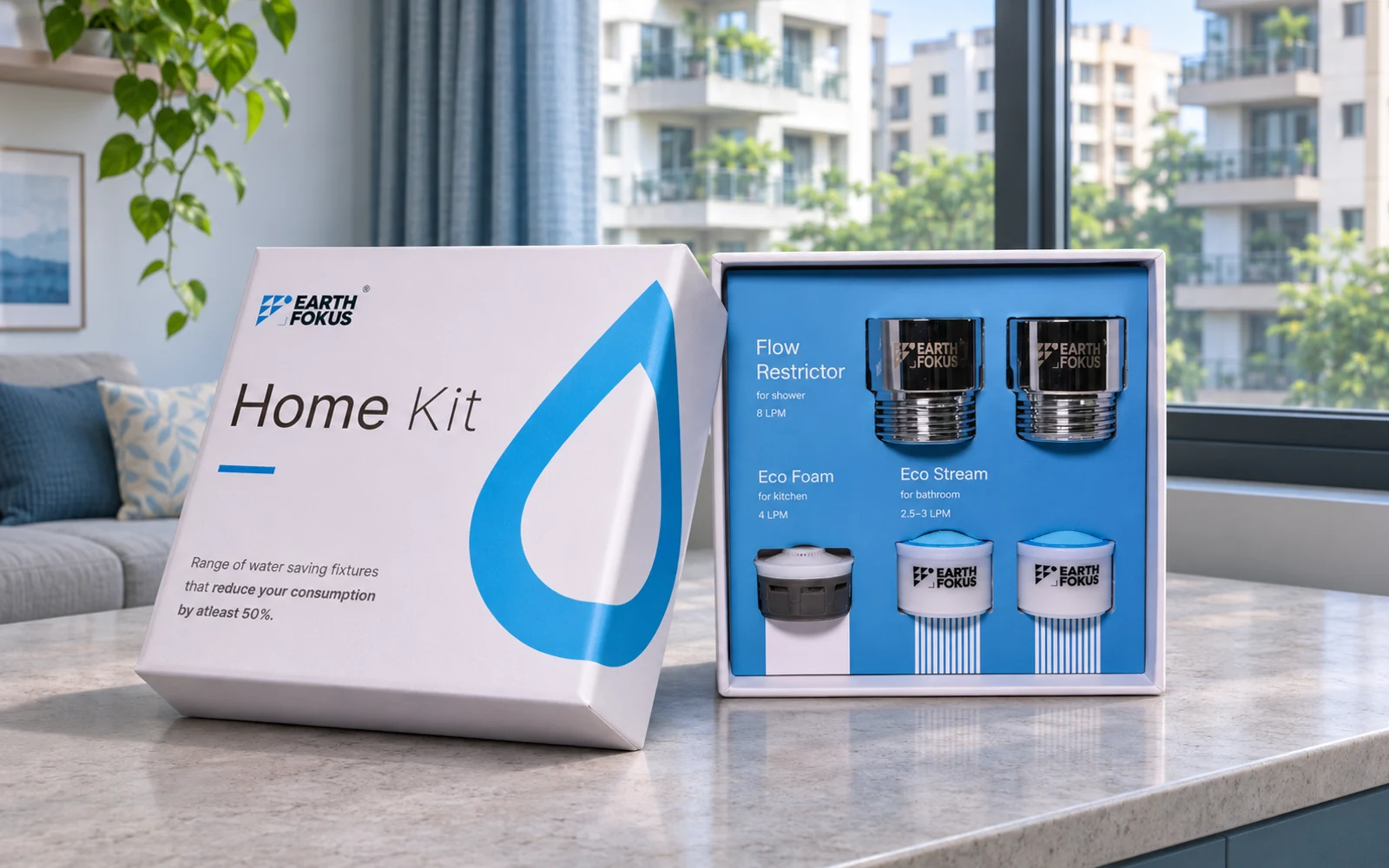
- Pantry sinks: 3 to 4.5 L/min, foamed. A foam or aerated stream such as Eco Foam (4 L/min) rinses cups without splashing and fills a bottle in reasonable time.
- Canteen and commercial kitchen sinks: 4.5 to 6.8 L/min. These fill pots and wash vessels, so the volume is often fixed. The EcoDuo range switches between a rain spray for rinsing and a foam or laminar stream for filling.
- Showers in hostels, hotels and change rooms: about 8 L/min. A flow restrictor between the arm and the head holds the shower at the IS 17650 2-star overhead shower line.6
- Clinical hand-wash basins. Not ours to set. Hospitals follow infection-control guidance; agree flows with that team.7
03The standards: what's asked, and what's followed
India's water efficiency standard for fittings, IS 17650 (Part 2):2021, rates each kind of fitting from 1 to 3 stars.8 It already makes the point of the last section: it sets different limits for different outlets.6
| Fitting | Unit | 1 star | 2 star | 3 star |
|---|---|---|---|---|
| Wash basin tap (incl. sensor taps) | L/min | 8.0 | 6.0 | 3.0 |
| Sink tap | L/min | 8.0 | 6.0 | 4.5 |
| Overhead shower | L/min | 10.0 | 8.0 | 6.8 |
| Hand-held shower | L/min | 8.0 | 6.0 | 4.0 |
| Hand-held ablution spray (health faucet) | L/min | 6.0 | 5.0 | 4.0 |
| Urinal | L/flush | 3.0 | 2.0 | 1.0 |
The catch is that the rating is something a manufacturer opts into, not a condition of sale.9 Most green-rated projects design against the IGBC baseline instead, which assumes 6 litres a minute for faucets and health faucets.5 Abroad, the line for hand-washing taps sits anywhere from 8.3 litres a minute down to 1.9.
In existing buildings, what's actually followed is usually none of these. Measure the flow at a typical basin in an older office or factory and it's common to find 10 litres a minute or more.
04How low can hand washing go?
Lower than most people expect. A study for CSA Group tested faucet flows from about 2 to 8 litres a minute and found no significant difference in how well hand washing removed bacteria: about 99.3% of E. coli at every flow.15 Water temperature didn't matter either; lather time did.16 The cleaning is done by soap and rubbing. The water only rinses.
That's why we set office basins at 0.9 litres a minute with the EcoMist Leaf, and why we go to 1.5 on shop floors rather than straight to an open tap. A well-formed stream at 1.5 litres a minute rinses soap and grime off hands properly; heavy grease may need 3.
Where we'd hold back.
- The evidence stops at 2 L/min. The hand-hygiene study didn't test lower, and Singapore's plumbing standard lists 1.5 litres a minute as a lower bound for basin taps.17 Below 1.5, user acceptance is the test: pilot one washroom and check the meter before rolling out.
- Filling tasks. If an outlet mostly fills bottles, buckets or pots, the volume is fixed, and a low flow only adds waiting. Use a higher rate there, not a lower one.
- Clinical basins. One study found that all three flow restrictors it tested at hospital hand-wash basins produced respirable bioaerosols.7 Leave those flows to the infection-control team.
05Health faucets: the outlet global standards ignore
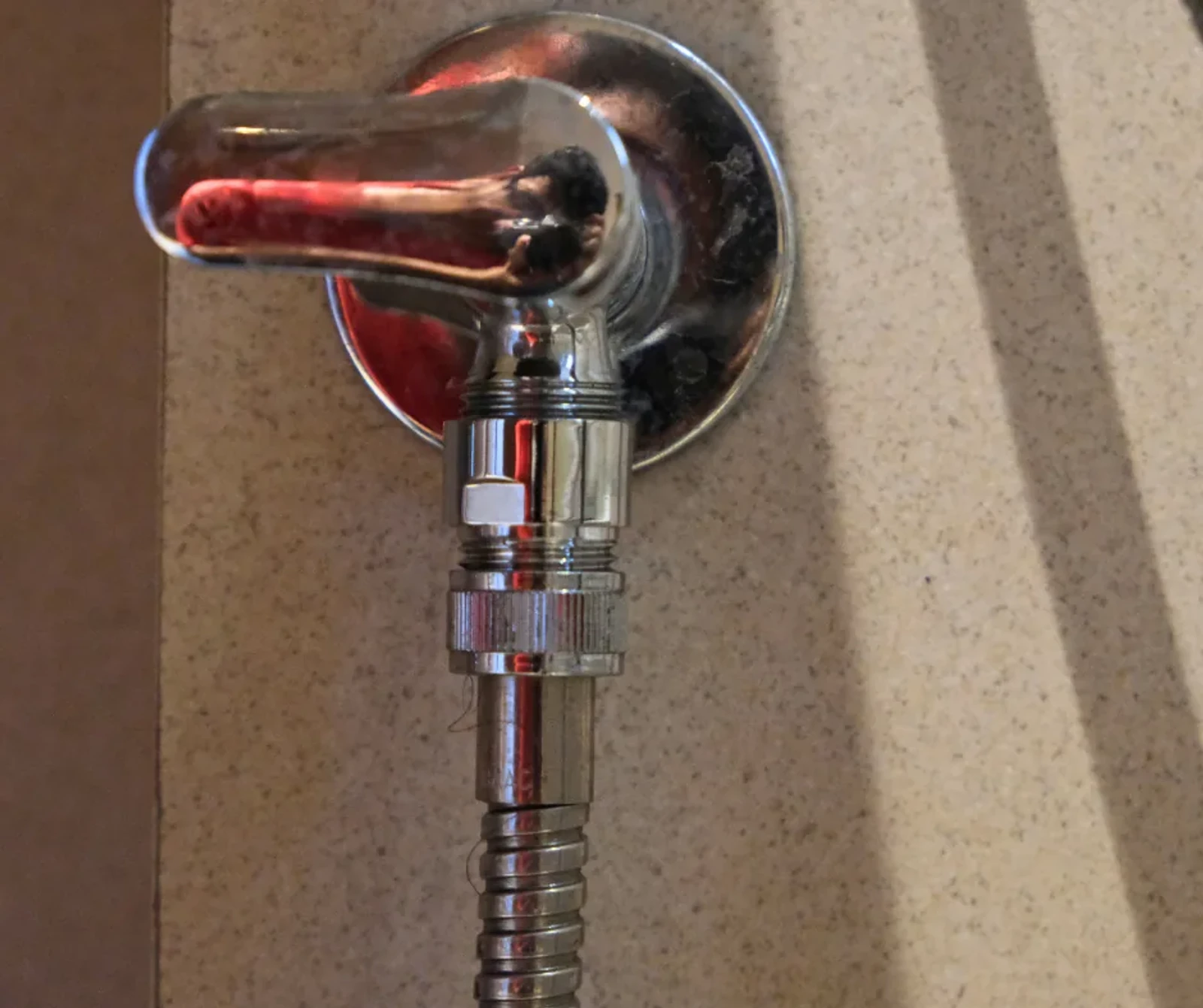
International labels say nothing about the health faucet, but in Indian washrooms it's used on almost every visit. IS 17650 covers it as the hand-held ablution spray: 6, 5 and 4 litres a minute for 1 to 3 stars.6 It's also the outlet most sensitive to pressure. On lower floors an unregulated health faucet delivers a jet that's both wasteful and uncomfortable. The Ministry of Housing and Urban Affairs notes that flow restrictors on health faucets can cut their flow by up to 60%.6
06Urinals: flush less, or not at all
We don't make urinals, but no commercial water plan is complete without them. IS 17650 rates urinals at 3, 2 and 1 litre per flush.6 Older sensor urinals often flush far more, on a timer whether anyone used them or not; MoHUA estimates an average urinal can waste 80 to 100 litres a day.6
A waterless urinal goes to zero. Instead of a water trap that needs refilling, it seals the drain with one of three things: a cartridge holding a liquid lighter than urine, a one-way rubber membrane, or a biological block that breaks down uric salts.18 MoHUA recommends them for offices, hospitals, banks and public toilets.6
Waterless urinals have a mixed reputation in India, and it's almost always earned by maintenance, not by the technology:
- The trap has to be looked after. The US Federal Energy Management Program stresses that daily maintenance matters for odour control, and that the cost of traps and chemicals should be weighed against the water saved.19 A US Army study put cartridge and fluid costs at roughly $45 to $120 per urinal a year.20
- Cleaning staff need different habits. A bucket of water or an acid cleaner poured into the outlet washes out the seal. Training is part of the installation.
- Drain lines matter. Uric salts deposit in drain pipes and release ammonia when they meet water and air, which is where most of the smell comes from.21 Check the drain material and slope before converting.22
- Check what the flush water is. If your urinals already flush with treated water from an on-site STP, going waterless saves STP capacity and pumping, not fresh water. Where urinals run on fresh water, the case is much stronger.
Our view: convert the urinals in high-traffic washrooms first, where the saving is largest and a cleaning team is on site every day. Where that isn't possible, a 1-litre or sensor-controlled urinal at the IS 17650 3-star line is the safer step.
07How a pressure-compensating saver holds its flow
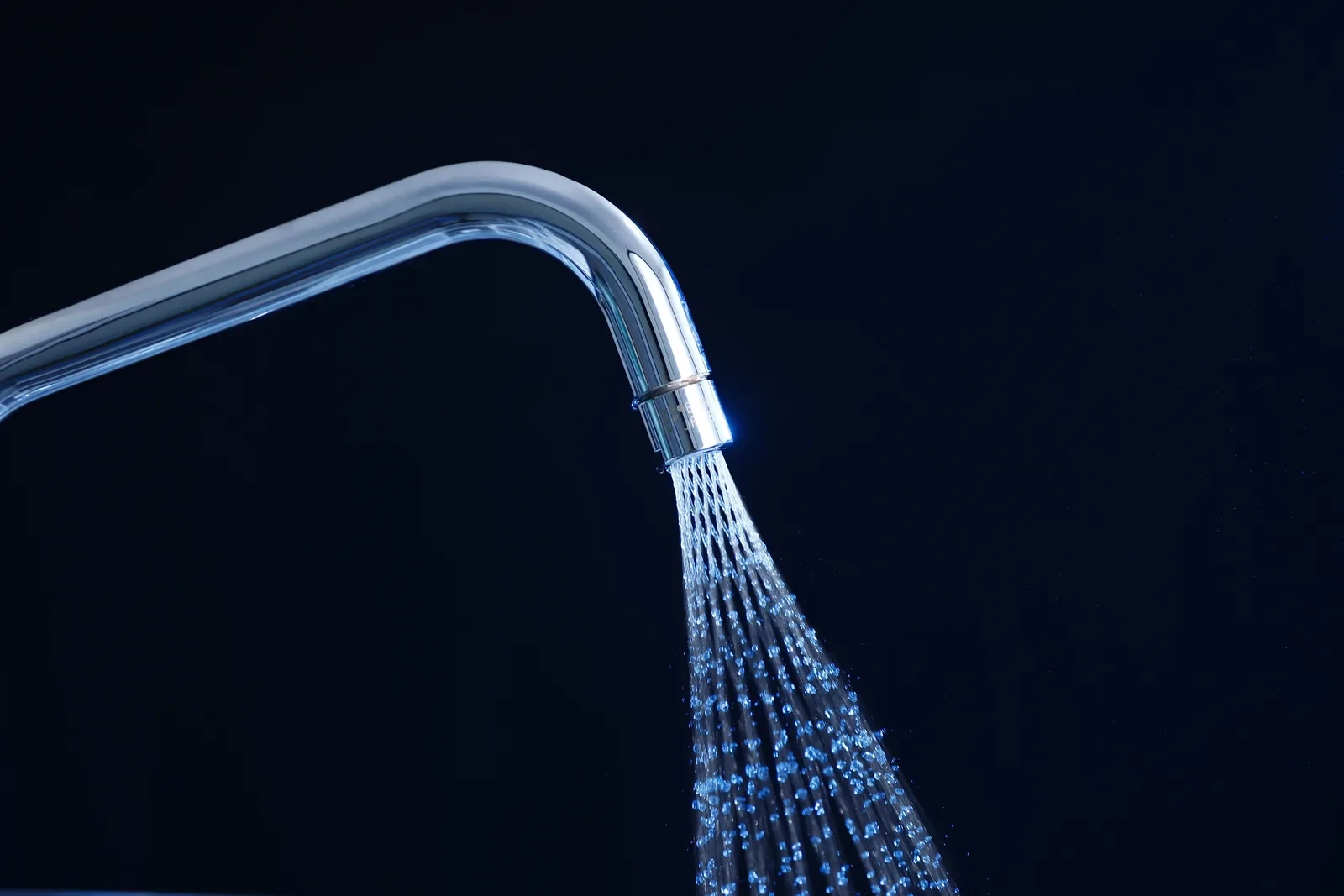
Pressure is why "fit and forget" fails in many Indian buildings. A tower fed from an overhead tank gives the lower floors far more pressure than the top ones, and the same mixer can deliver 9 litres a minute at 1 bar and 15.6 at 3 bar.1 A plain aerator lets more water through as the pressure rises. A pressure-compensating saver adds a flexible ring in a shaped seat: the harder the water pushes, the more the ring deforms and the narrower the opening, so the flow stays close to its rating within its pressure range. All EarthFokus savers and restrictors work this way.
08The range, outlet by outlet
Our range follows the same logic as Figure 2: a family of savers, each built for a job. All are pressure-compensating, and all carry a one-year warranty.
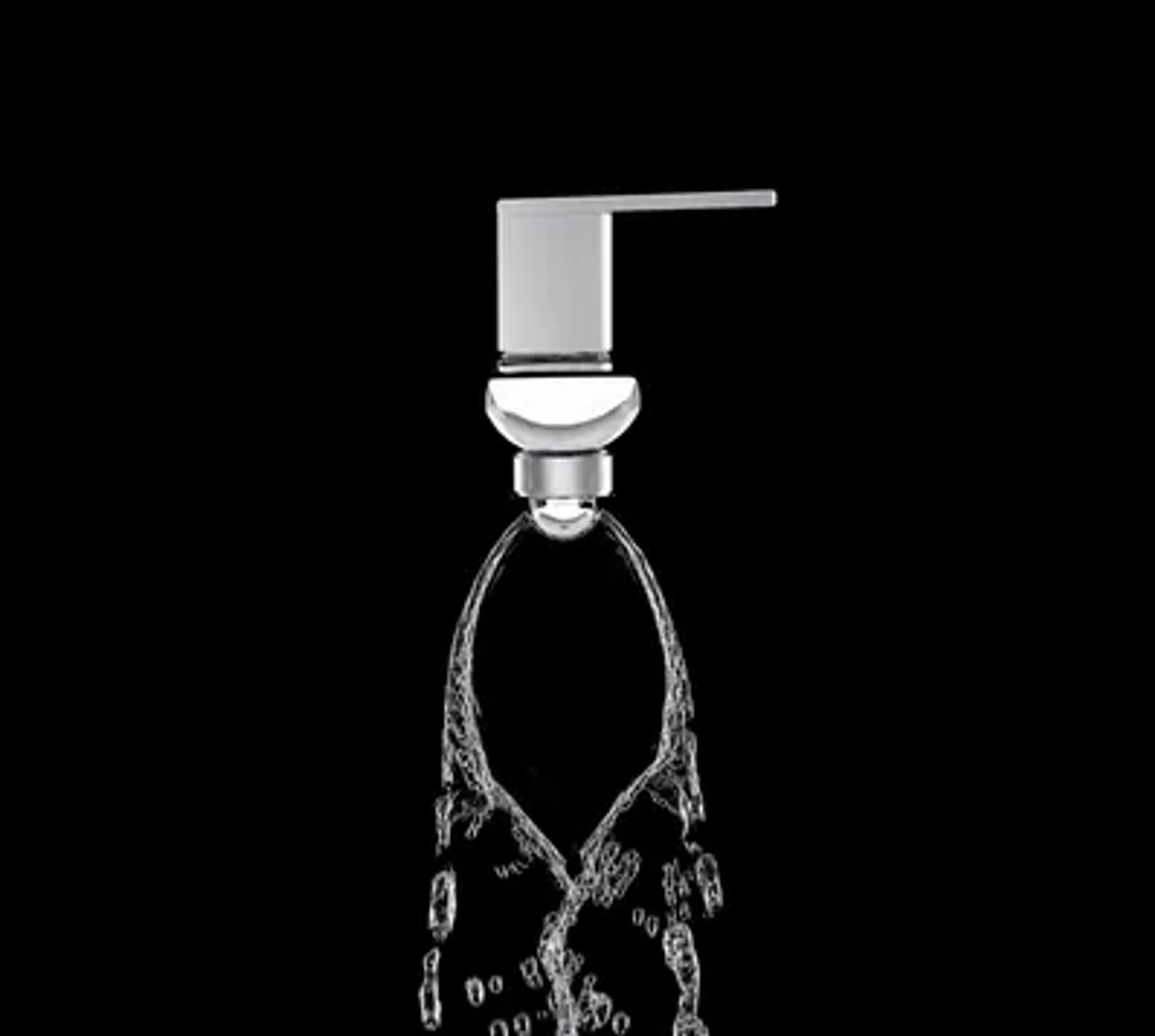
EcoMist Leaf
0.9 · 1.5 L/min
Brass build with a distinctive leaf-pattern stream. Our lowest flow, for hand washing.
WF-EML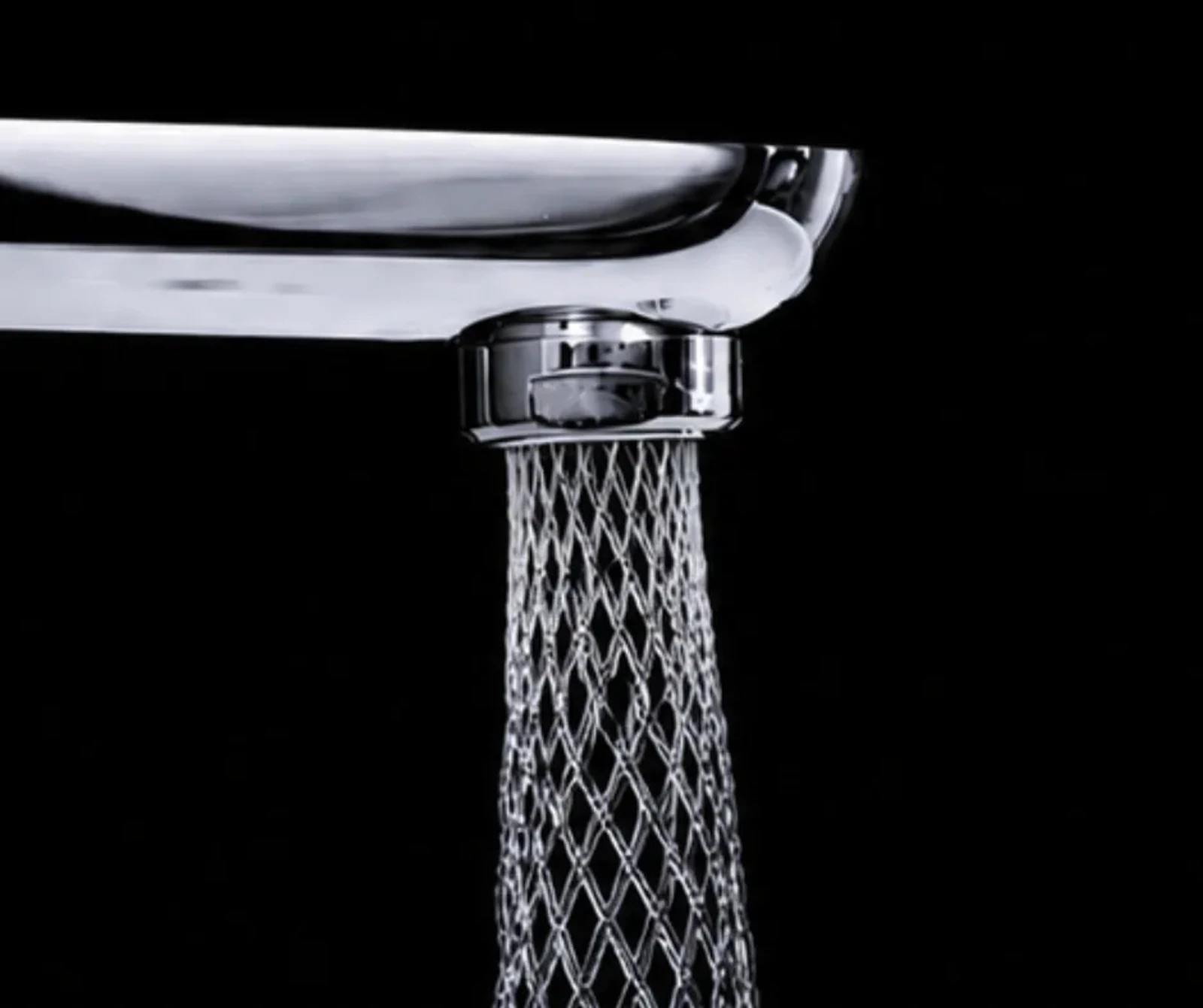
Ecostream Diamond
1.5 · 3 L/min
Brass build with a controlled lattice stream that rinses firmly at low flow.
WF-ESD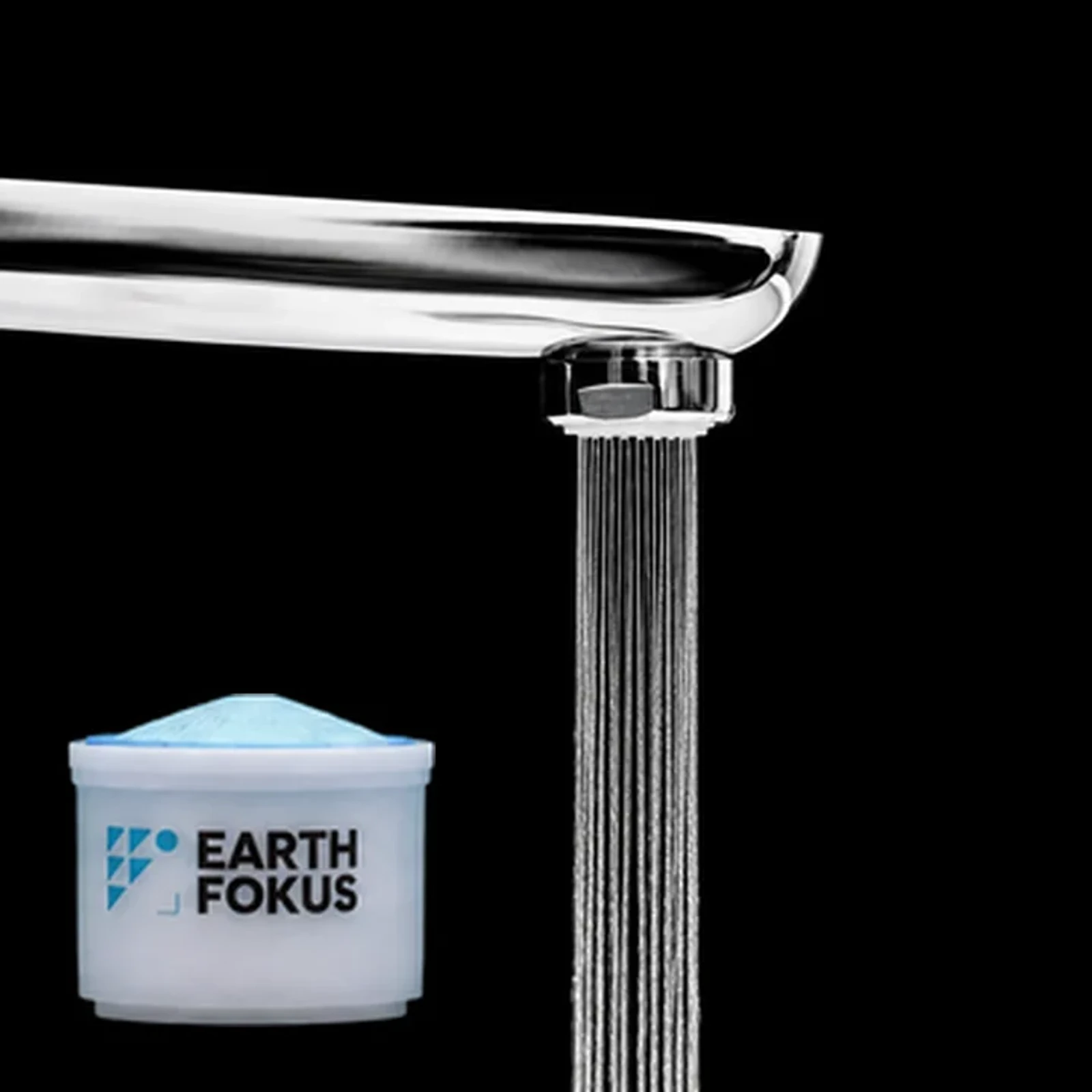
Ecostream Delrin
1.5 · 3 · 4.5 L/min
Delrin build with a linear aerated stream. The most flexible of the range.
WF-ES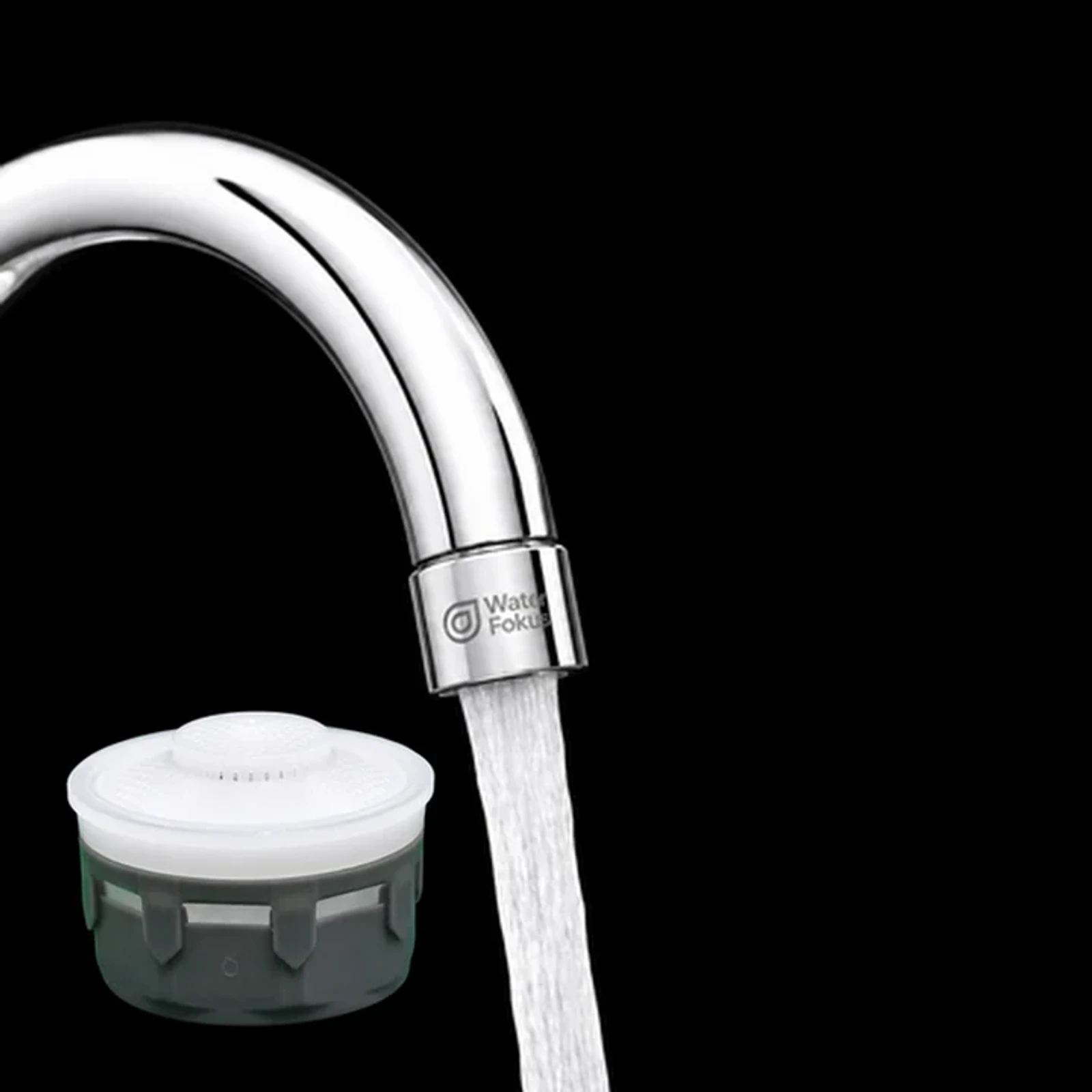
Eco Foam
4 L/min
Delrin build with a soft, aerated foam stream that doesn't splash.
WF-EF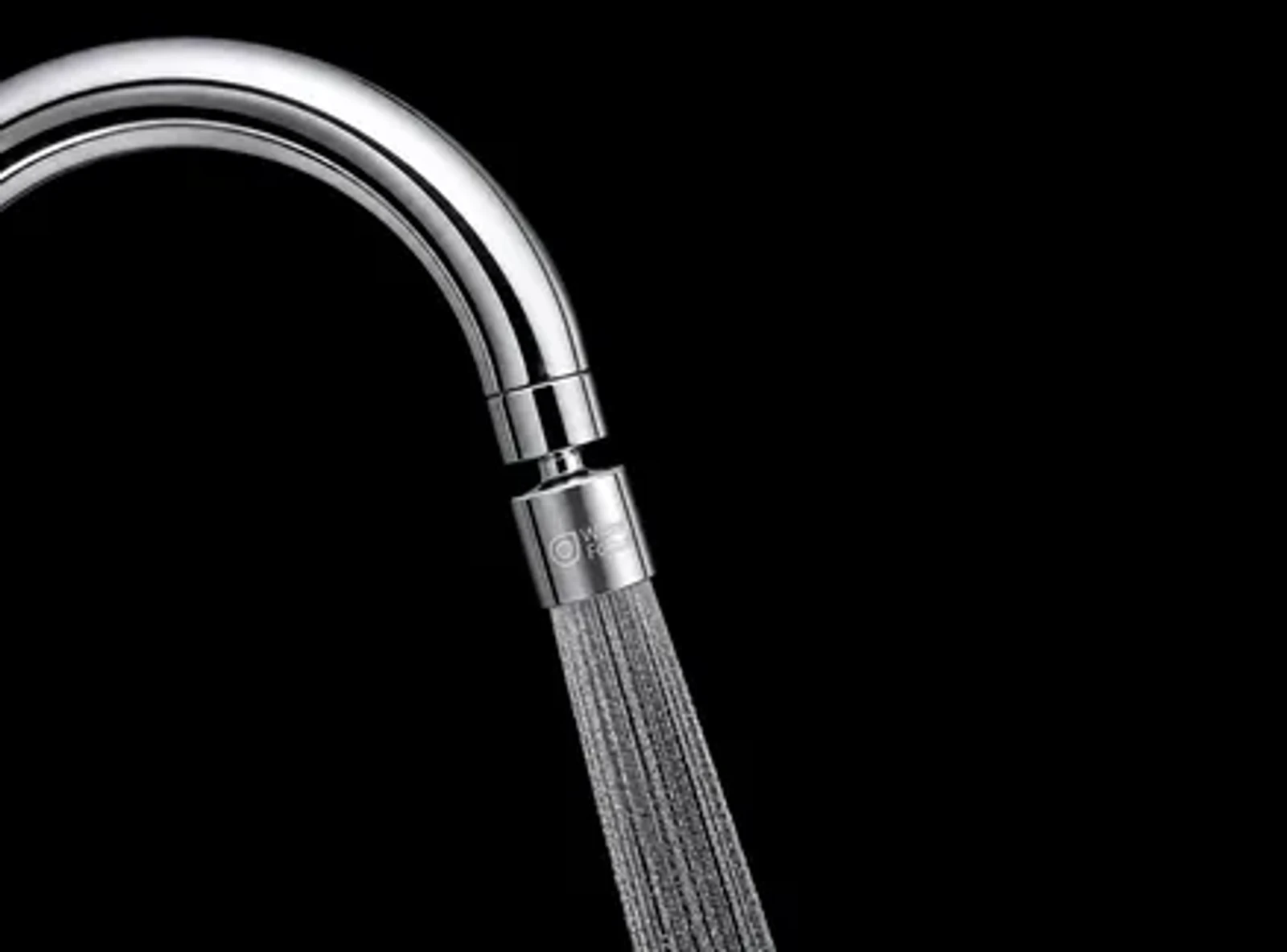
EcoDuo range
4.5 · 6.8 L/min
Swivel savers with two modes: rain plus foam, mist or laminar. Single, double and triple-axis versions, plus Flip Flow.
WF-ED-100 · 200 · 300 · FF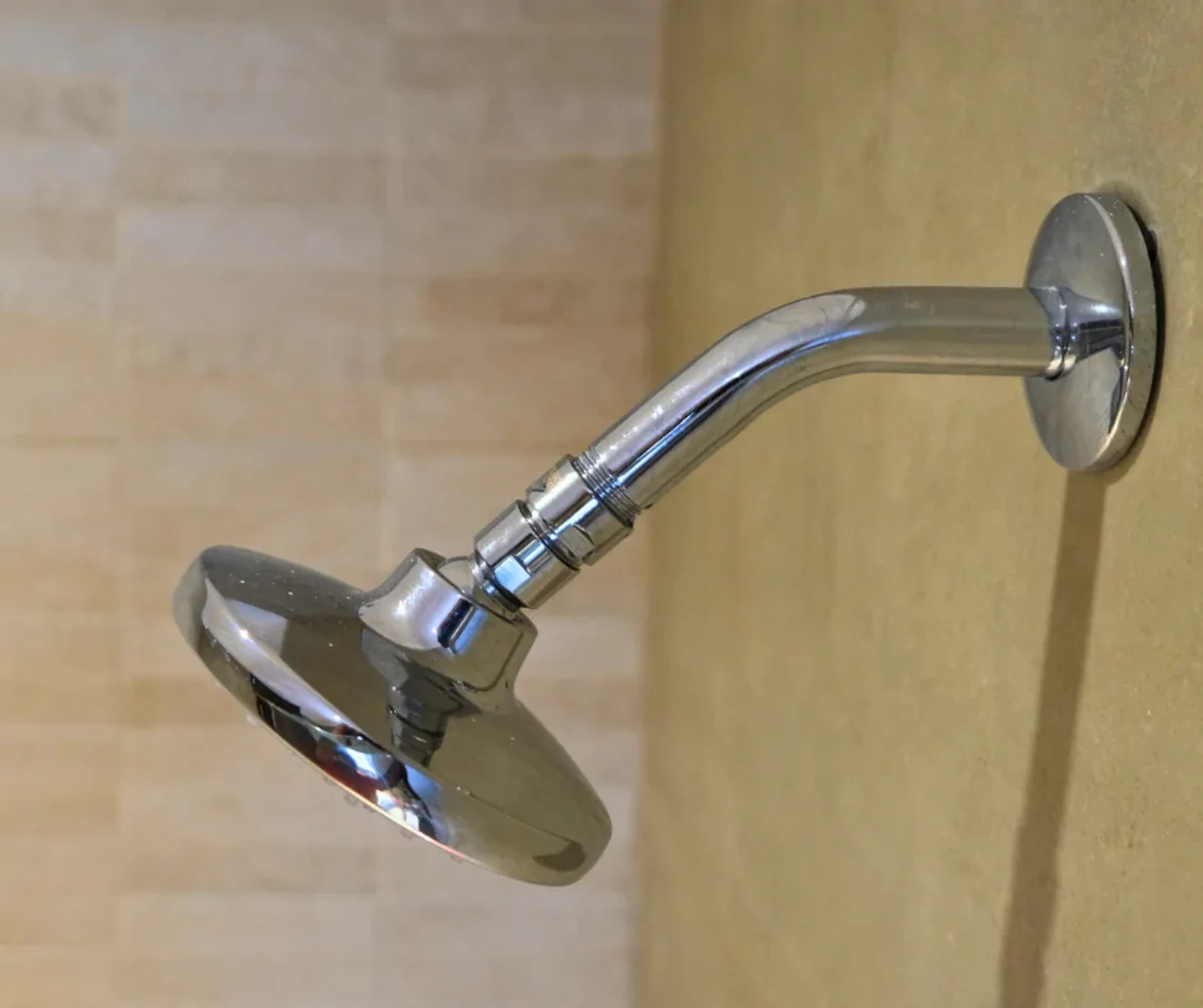
Shower flow restrictor
8 L/min
Fits between the shower arm and the head. No change to the shower itself.
For public washrooms, the catalogue also lists anti-theft housings and thread adaptors from M16 to M24, plus a 360° adaptor, so one saver family fits most of the taps a building already has.
Water saving fixtures catalogue
Every saver with model numbers, flow ratings, adaptors and housings. PDF, 5.5 MB.
Download the catalogue09A worked example: a factory with an office
Take a site with 600 office staff, 400 shop-floor workers, 10 pantry sinks and a canteen with 6 sinks, working 300 days a year. Every unregulated tap starts at 12.7 litres a minute and every health faucet at 8. Each outlet then gets the saver that fits its job.
| Outlet | Assumed use | Before | After | m³ a year |
|---|---|---|---|---|
| Office basins | 600 people × 1 min a day | 12.7 | 0.9 | 2,286 → 162 |
| Shop-floor basins | 400 people × 2 min a day | 12.7 | 1.5 | 3,048 → 360 |
| Health faucets | 1,000 people × 15 s a day | 8.0 | 4.0 | 600 → 300 |
| Pantry sinks | 10 sinks × 30 min a day | 12.7 | 4.0 | 1,143 → 360 |
| Canteen sinks | 6 sinks × 2 h a day | 12.7 | 6.8 | 2,743 → 1,469 |
| Total | 9,820 → 2,651 |
Two cautions. The arithmetic assumes people wash for as long as before. If they hold their hands under a gentler stream for longer, the saving shrinks. And it ignores the toilets, process water and cooling towers. The only way to know the real number is to meter the outlets before and after.
10The saving doesn't stop at the meter
A kilolitre that isn't used is a kilolitre that isn't pumped from the borewell or the sump, isn't pumped again to the overhead tank, isn't softened or filtered before use, isn't treated in the STP afterwards and, on many sites, isn't trucked in at all. Each of those steps costs electricity, chemicals or diesel, and none of them shows up on the water bill.
On a site that buys its water by tanker, the diesel can outweigh the electricity. In the example above, roughly 600 avoided tanker trips would avoid about 8 tonnes of CO₂ from the trucks alone, against about 3 tonnes from pumping and treatment electricity. Water saving is an energy and carbon measure too, and it belongs in the same report as both.
11Rolling it out so the saving is real
Survey every outlet
List every basin, health faucet, sink, shower and urinal by floor and by use. Time how long each takes to fill a one-litre jug: flow in L/min is 60 divided by the seconds.
Give each outlet a job
Washroom, shop floor, pantry, canteen, shower, clinical. The job sets the flow band in Figure 2, and the band sets the saver.
Measure a baseline first
Read the meters that feed the washrooms and kitchen for at least two weeks before fitting anything. Without a baseline, the saving is a claim, not a result.
Fit, re-test, record
Fit the savers, repeat the jug test on every outlet, and keep the record by outlet. Use anti-theft housings in public washrooms.
Pilot before you scale
Start with one washroom, one shop floor and the canteen. Ask the people who use them, and fix complaints before they turn into removed savers.
Keep it fitted
Clean screens as routine maintenance, more often where the water is hard, and re-check a sample of outlets every quarter.
Steps 3 and 4 are where most retrofits fall down, and where we spend most of our effort. A Water Assessment maps the outlets and meters the baseline. Where a site runs WaterOS, the before-and-after shows up in the zone and building trends, so the saving is a number on a report rather than a promise in a brochure.
12Frequently asked questions
Why not fit the lowest-flow saver everywhere?
Because outlets do different jobs. At a canteen sink that fills pots, a very low flow saves nothing (the pot holds what it holds) and makes staff wait, so the saver gets removed. Match the flow to the job, as in Figure 2.
What flow should a shop-floor basin have?
1.5 to 3 litres a minute. A well-formed 1.5 litre stream rinses most grime; go to 3 where hands are heavily greased.
Do waterless urinals smell?
Not when they're maintained. Smell usually comes from a cartridge or membrane left past its life, cleaning that washes out the seal, or uric salt build-up in drain lines.21 Plan the maintenance before the installation.
Do savers work on sensor taps?
IS 17650's basin tap limits include sensor taps.6 Whether a saver fits depends on the outlet thread; the adaptor range covers most sizes. Check during the survey.
Does saving water really cut CO₂?
Yes, through the pumps, the STP and, where water is trucked, the tankers. Figure 7 shows the arithmetic per 1,000 m³.
Sources
- Manufacturer's published chart, Flow rates by pressure for basin mixers (single-lever basin mixer DRC-37011B).
- Central Ground Water Authority, Estimation of water requirement for drinking and domestic use (source: National Building Code 2016).
- Eawag, On-site water reuse systems in Bengaluru, India.
- Deccan Herald, BWSSB: STPs and dual piping for new buildings.
- IGBC, Green New Buildings rating system: water efficiency credits and baseline flow rates (document copy).
- Ministry of Housing and Urban Affairs, Part A, Chapter 15: Water efficient plumbing fixtures (Table 15.2, IS 17650 rating criteria; waterless urinals; flow restrictors).
- Flinders University, Infection risk at wash basins (Hayward et al., Building and Environment, 2025).
- Bureau of Indian Standards, Standards for water efficient plumbing products (IS 17650 Parts 1 and 2).
- Bureau of Indian Standards, Circular on labelling and marking for water efficiency rating as per IS 17650 (8 June 2022).
- PUB, Singapore, Water Efficiency Labelling Scheme requirements.
- US EPA, WaterSense at Work, Section 3.3: Faucets.
- MaP Testing, Public lavatory faucet flow rates (ASME A112.18.1).
- LEEDuser, LEED v4 indoor water use reduction baselines.
- Smart WaterMark, WELS ratings for taps.
- Prof. Bill Anderson, University of Waterloo, Summary of the CSA Group study on faucet flow rate and handwashing.
- Rutgers University via ScienceDaily, Cool water as effective as hot for removing germs.
- Singapore Standard SS 636:2018, Amendment No. 1, Table 1: flow rates at fittings.
- India Water Portal, Resource book: waterless urinals save water, energy and use urine as a resource.
- US Federal Energy Management Program, FEMP designated product: urinals.
- US Army ERDC, Waterless urinals (CERL TN-06-3).
- NITI Aayog Frontier Tech, How bio-based sanitation systems are reducing water waste in cities.
- Clean India Journal, Everything about waterless urinals: selecting, installing and using them successfully.
- International Journal of Environmental Science and Technology (2020), Environmental and energy analysis of a sequential batch reactor wastewater treatment plant: 0.26 kWh/m³.
- Water-energy-GHG nexus in a wastewater treatment plant of the Mumbai Metropolitan Region, 0.23 ± 0.05 kWh/m³ (catalogue record).
- Saur Energy, CEA CO₂ Baseline Database for the Indian Power Sector, Version 20.0: weighted average 0.727 tCO₂/MWh for 2023-24.
- Deccan Chronicle, Chennai private water tankers: 9,000 to 30,000 litres a load.
- Smart Freight Centre India via Climatiq, Diesel, road transportation: 2.675 kg CO₂e per litre (tank-to-wheel).
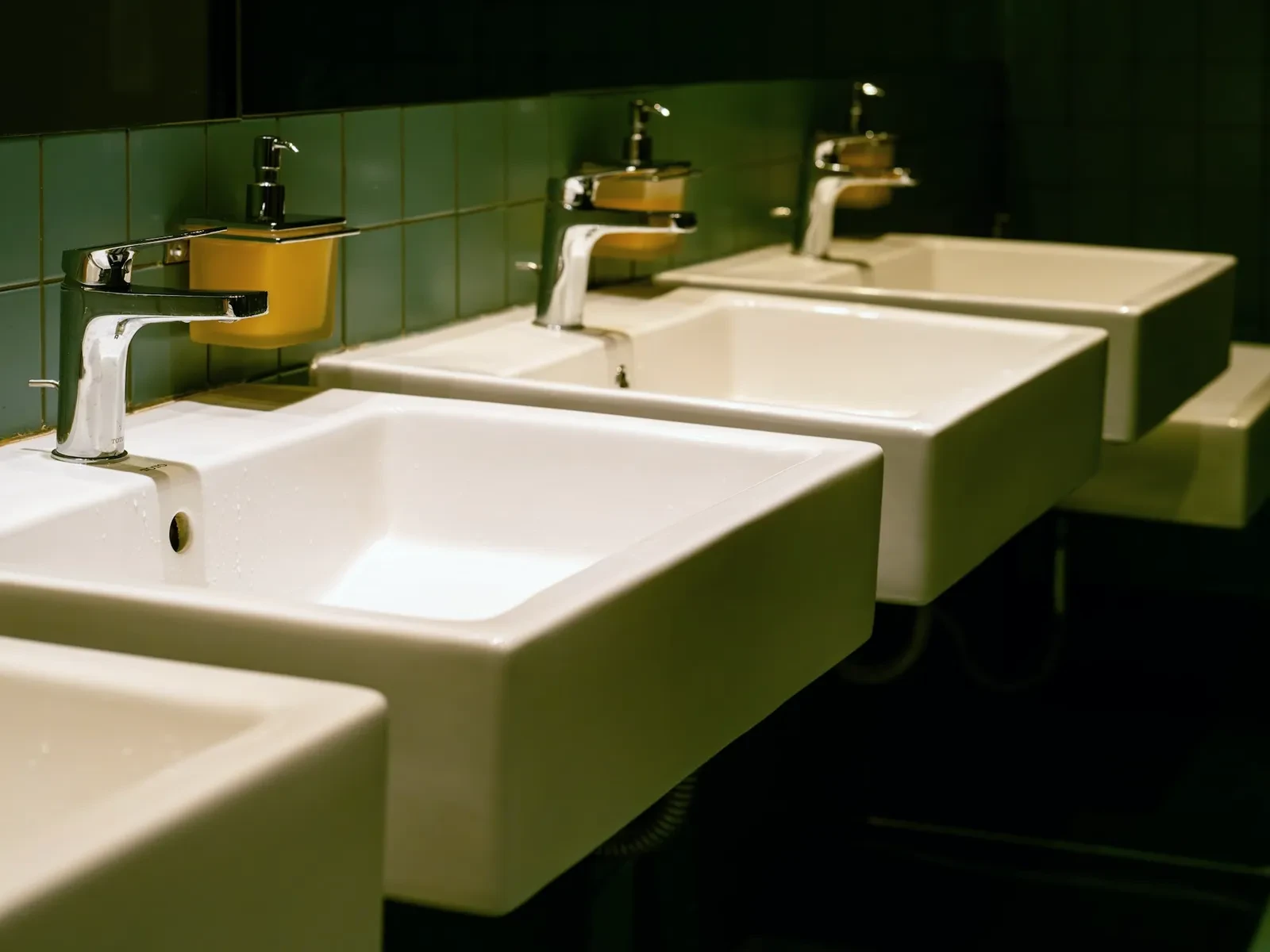
Product photographs: EarthFokus. Washroom photograph from Unsplash (Declan Sun), used under the Unsplash License; illustrative, not an EarthFokus site. Diagrams are generic illustrations.