Recover
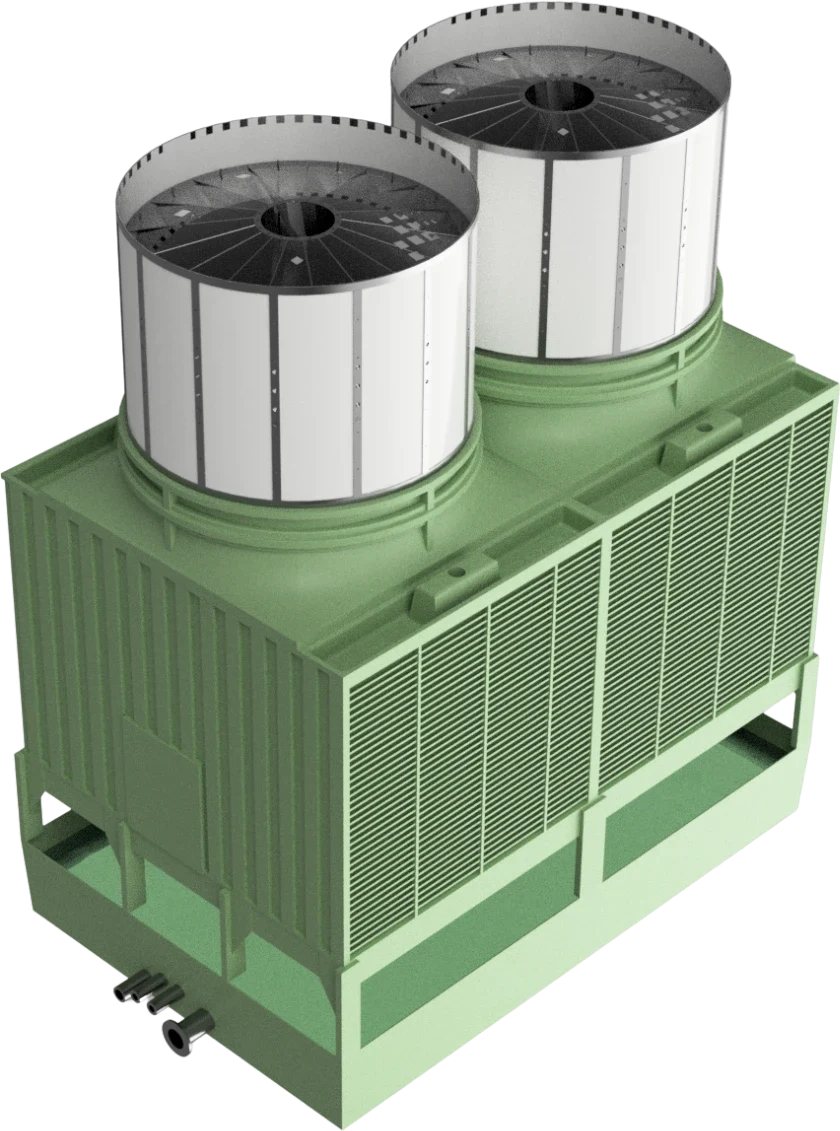
The EcoVapure Module.
Fits on the fan stack, catches water leaving the tower and returns it to the basin.
How it recovers water

EcoVapure recovers water leaving your cooling tower and returns it to the basin. WaterOS uses live data to help your team reduce water, energy and chemical use.
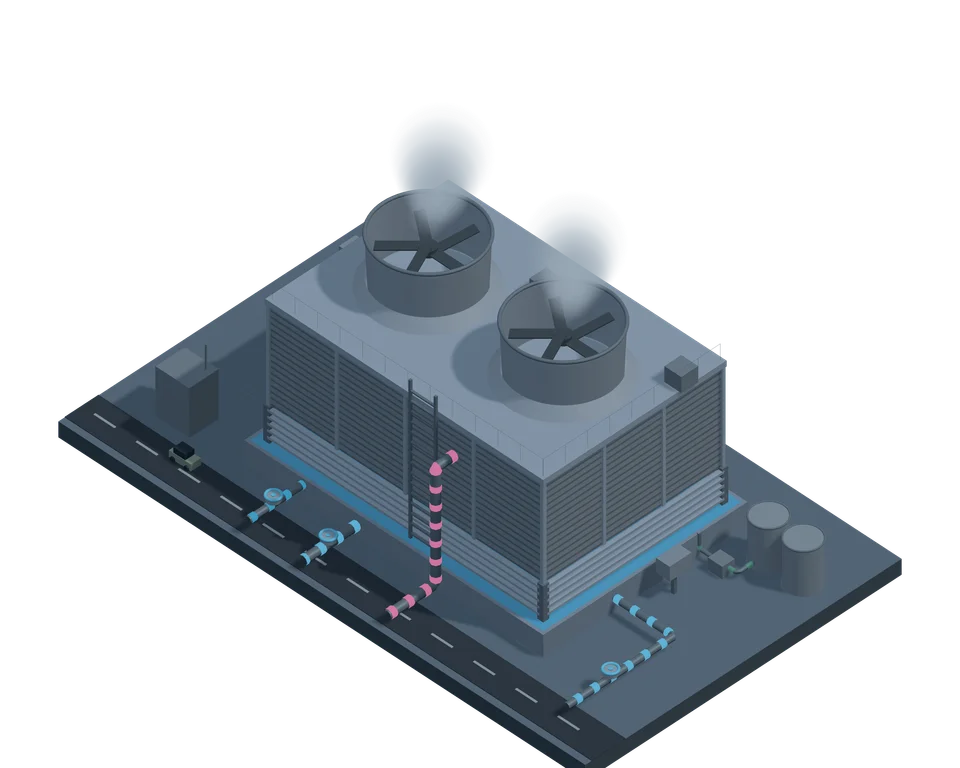
Pick a problem to see where it happens on the tower.
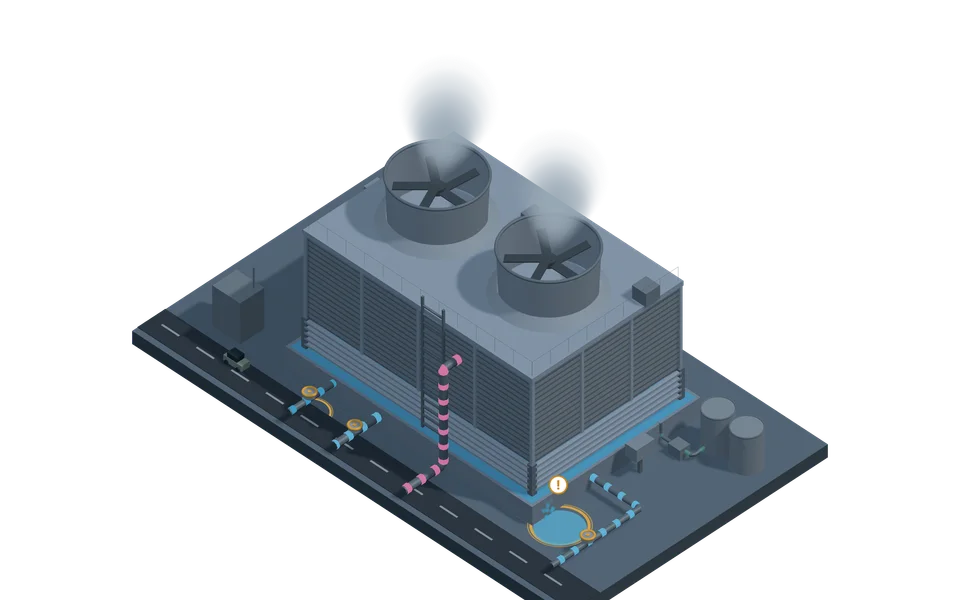
Fits on the fan stack, catches water leaving the tower and returns it to the basin.
How it recovers water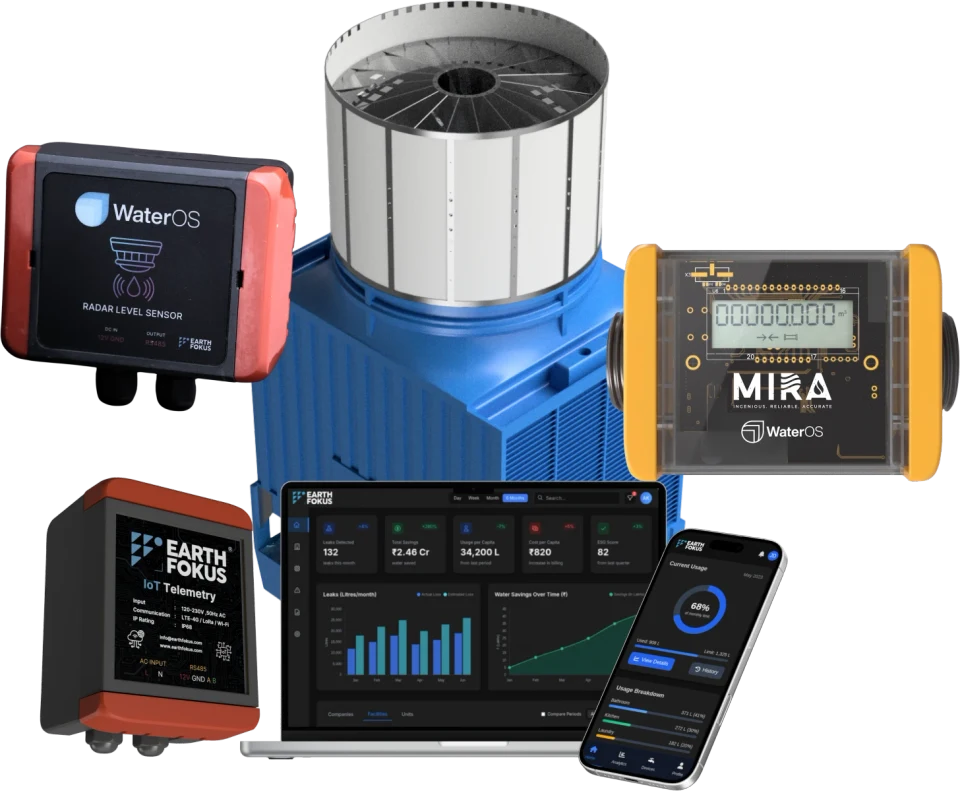
WaterOS reads every tower, recommends what to change and verifies the saving.
How it runs the towerThe module sits on the fan stack of your existing tower. Water in the exhaust collects on its surfaces and returns to the basin, reducing make-up demand.
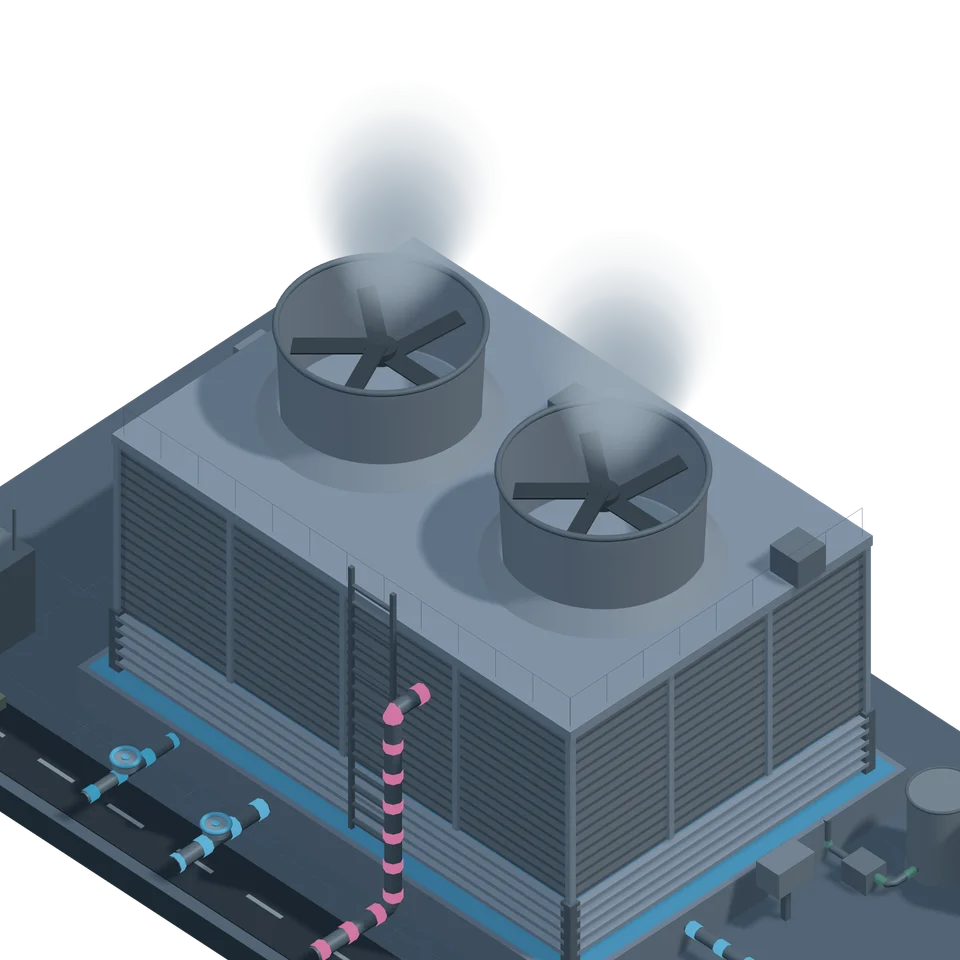
Sensors feed WaterOS. It compares each tower with its model and operating history, recommends a change, and verifies the result after an engineer approves it.
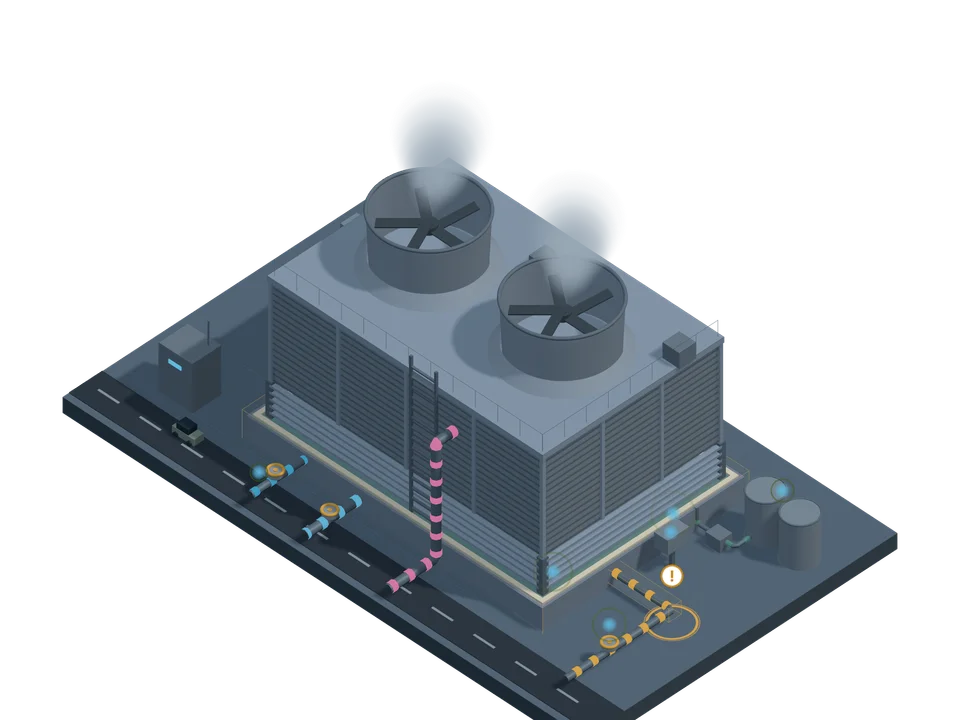
Set cycles for your water chemistry, then verify the effect on blowdown.
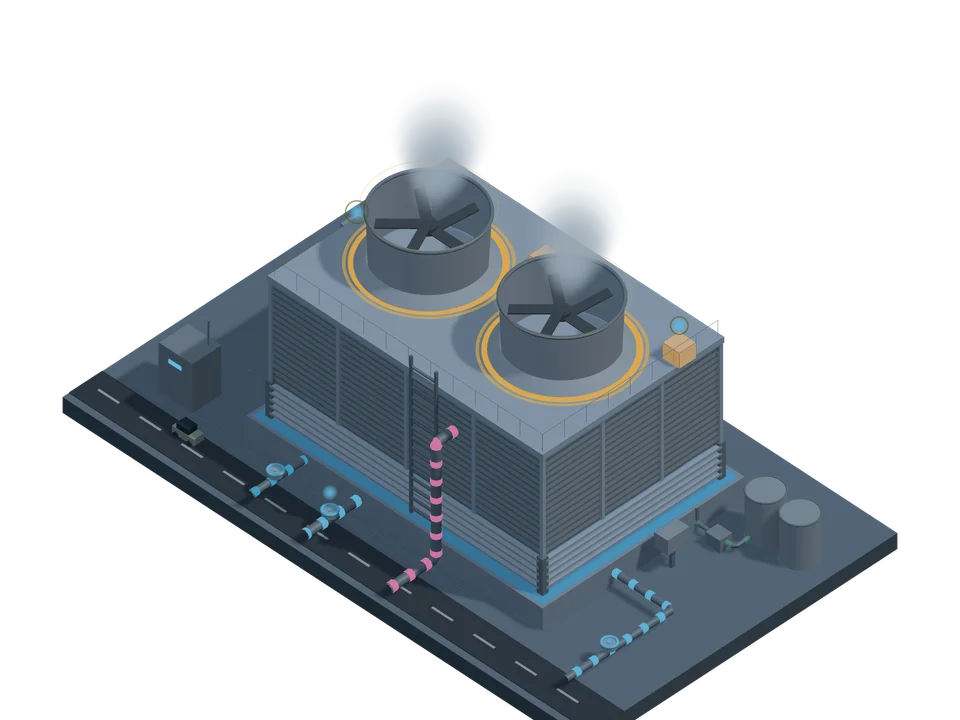
Match fan speed and blade pitch to the heat load.
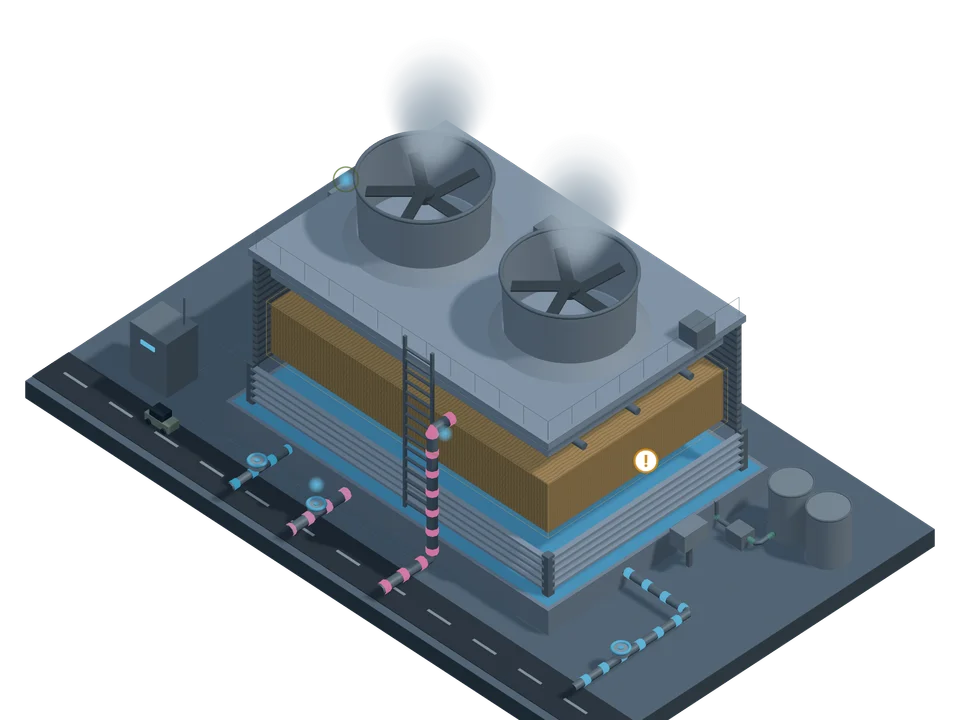
See when fouled fill or poor airflow costs you cooling.
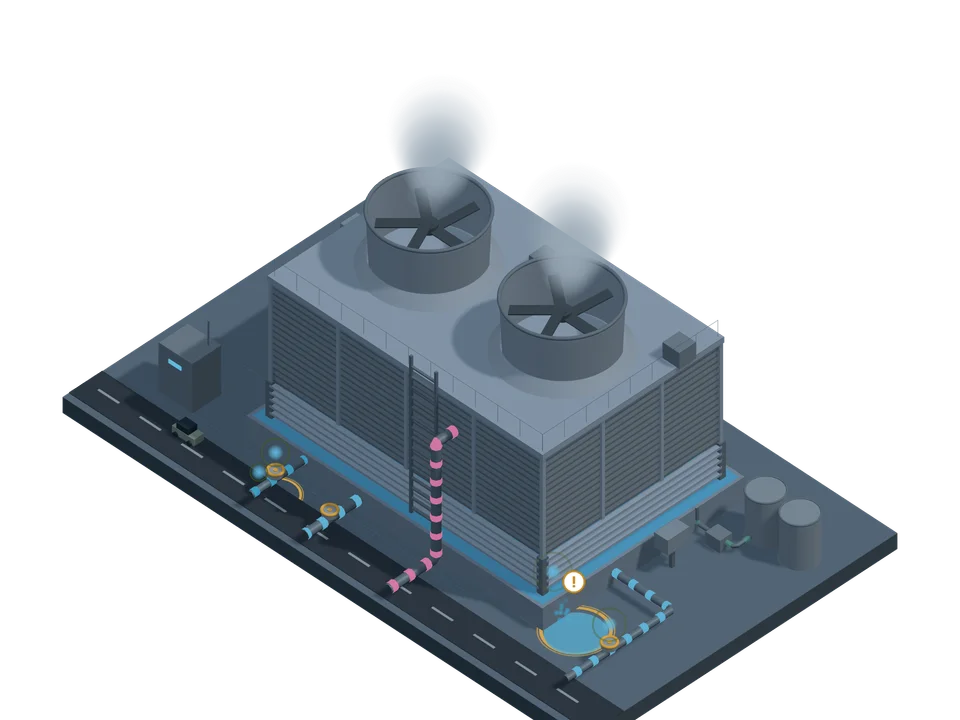
Find overflows and abnormal make-up, then check the repair.
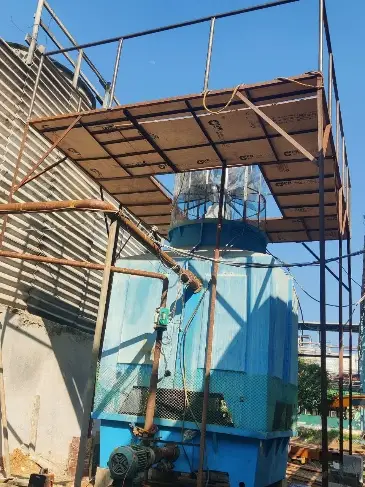
Distillery
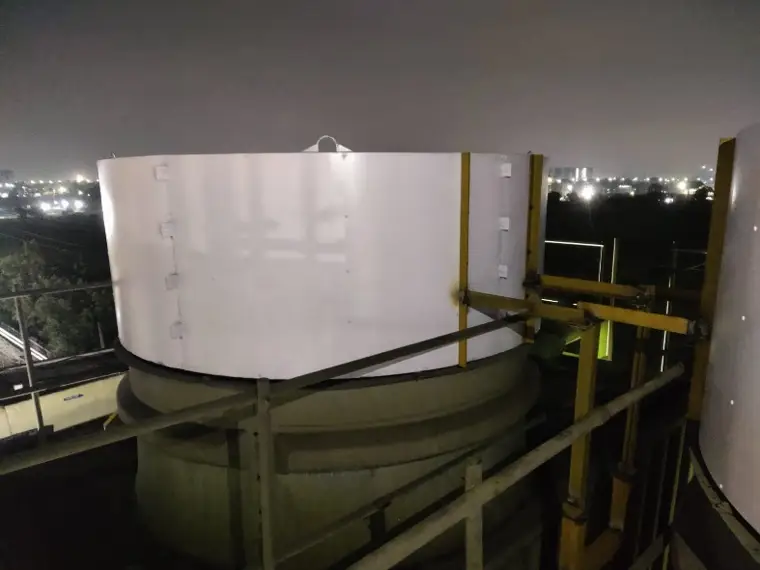
Pharmaceuticals · Phase 2 trial
 Water innovation recognition
 FICCI Water Awards
 Water accelerator
 QSTP × TotalEnergies
 Incubated at IIT Madras
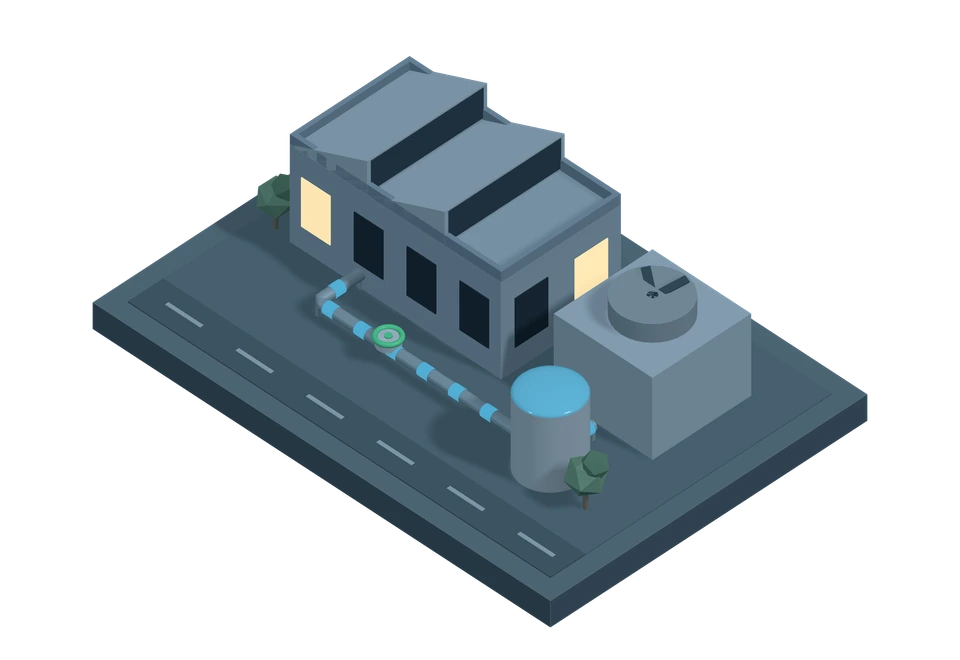
Process cooling that runs around the clock.

Cooling where water use per unit of IT load matters.

Central chiller plants serving whole campuses.

Critical cooling that cannot stop.
One tower, an agreed baseline and a result you can verify.
Review your tower, water chemistry and goals.
Connect readings to WaterOS and agree the baseline.
Tune blowdown and fans, then fit the module where it suits your tower.
Compare make-up with the baseline and report the saving.
Share your tower capacity, operating hours and any recent readings.
Fitting the module needs a short, planned shutdown.
Water leaves with the exhaust air, as fine droplets carried out as drift, through blowdown used to control dissolved solids, and through leaks or overflows. EPA WaterSense: Cooling Towers
CoC compares the dissolved-mineral concentration in circulating tower water with that in the make-up supply. Higher CoC can reduce blowdown and make-up demand, within the limits of your water chemistry and treatment programme. DOE’s example of increasing from three to six cycles reduces make-up demand by about 20%; the right operating target must be agreed with your treatment specialist. US Department of Energy: Cooling Tower Management
Approach is the difference between the cold water leaving the tower and the outdoor wet-bulb temperature. At comparable load and weather conditions, an increasing approach can indicate fouled fill, blocked nozzles or reduced airflow. Inspecting these conditions helps identify the cause and restore cooling performance. SPX Cooling Technologies: Operation and Maintenance
Match airflow to the cooling duty by reviewing fan schedules, speed control and blade pitch within the manufacturer’s operating limits. For the same fan, power varies approximately with the cube of speed: 80% speed requires roughly half the full-speed power. An engineer should approve changes and verify the result against cooling performance. ASHRAE: Supervisory Control Strategies and Optimization
WaterOS combines a physics model of the tower’s load and weather conditions with comparisons against its operating history and comparable towers. Machine learning helps identify unusual behaviour and suggest what to investigate. An engineer approves each recommendation, and the result is verified in the data.
The measurement plan is agreed for each site. It can include make-up and blowdown flow, conductivity, pH, ORP, chemical tank levels, water temperatures, outdoor wet-bulb temperature, fan power and run hours. We use compatible existing meters and identify where additional measurement is needed.
WaterOS brings water-quality and operating readings together to support recommendations for blowdown settings and inhibitor or biocide dosing. Make-up water analysis and your treatment partner’s guidance determine the appropriate chemistry limits. Your treatment partner approves the recommendations. Automatic dosing control is in development.
The EcoVapure Module sits above the fan stack. Exhaust air passes through its capture surfaces, fine droplets combine into larger drops, and collected water flows through a gutter and return line to the basin.
Fitting the module needs a short, planned shutdown. We assess the fan stack and access requirements first, then agree the installation schedule with your site team.
Before any change, we establish a baseline from your readings. Afterwards, we compare water use, energy and cooling performance under comparable operating conditions, then share the measurements with your team.
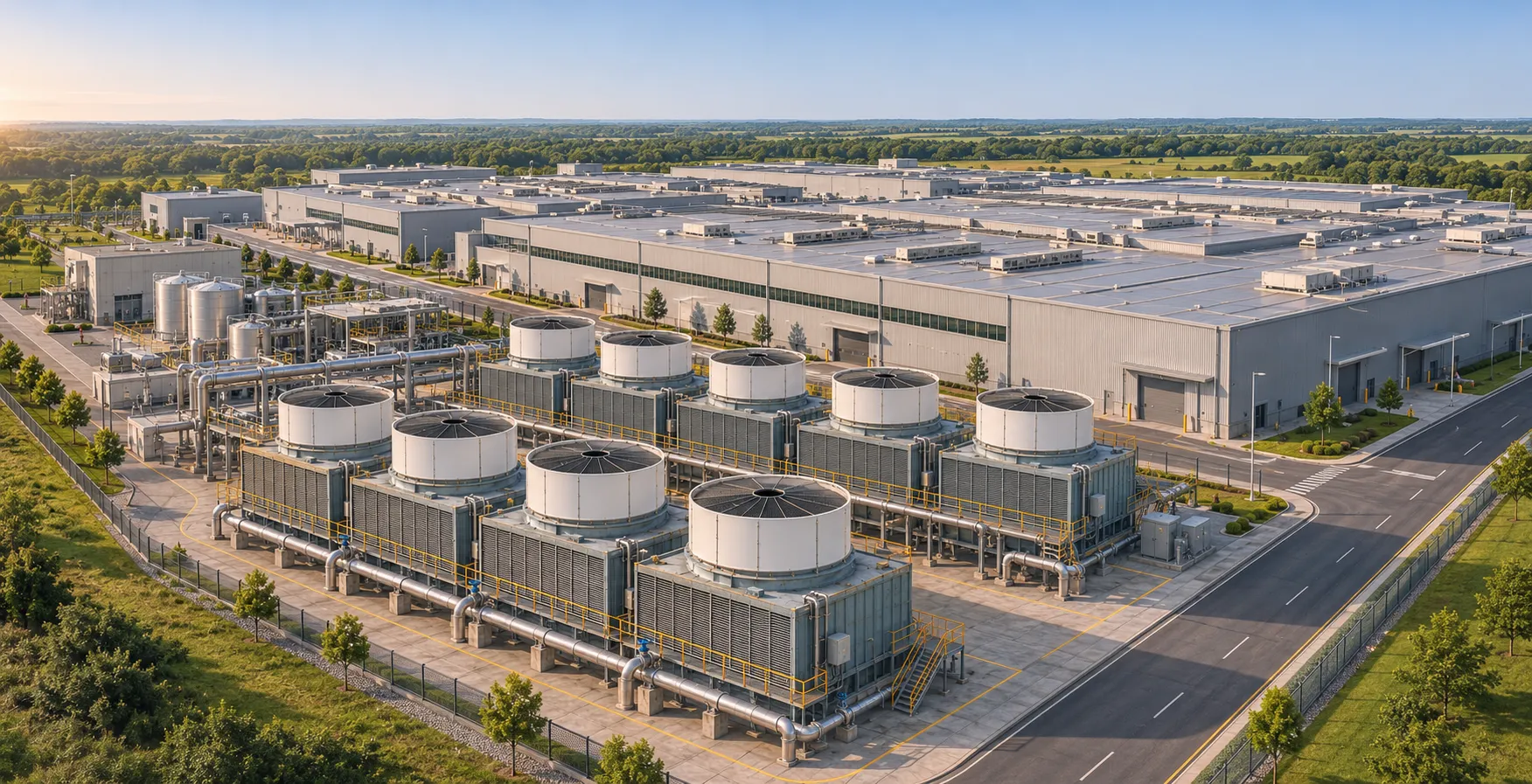
Start with a tower baseline. If the EcoVapure Module suits your site, we'll plan a pilot together.
Diagrams and management readings are illustrative. Site results are shown in the case studies.